
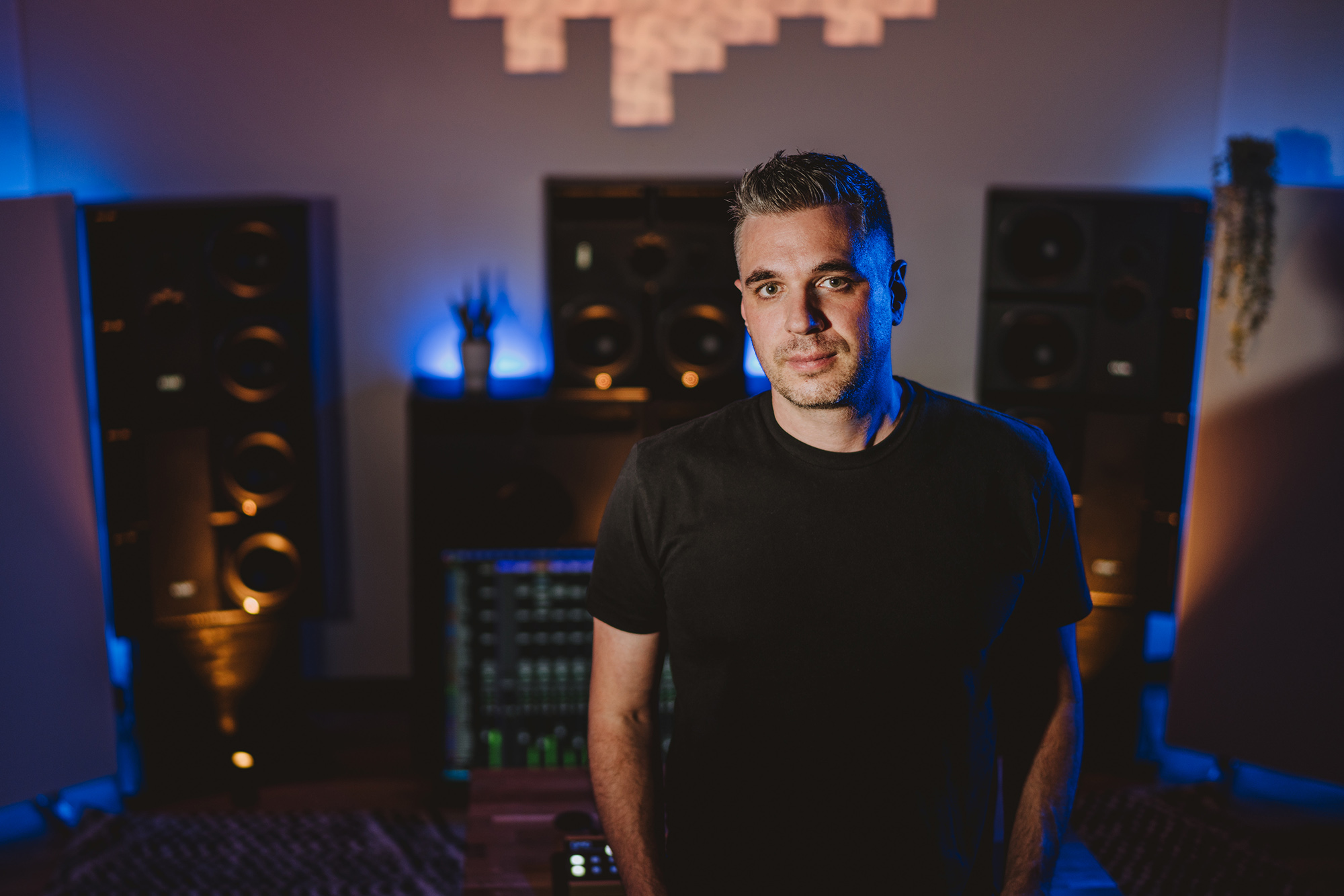
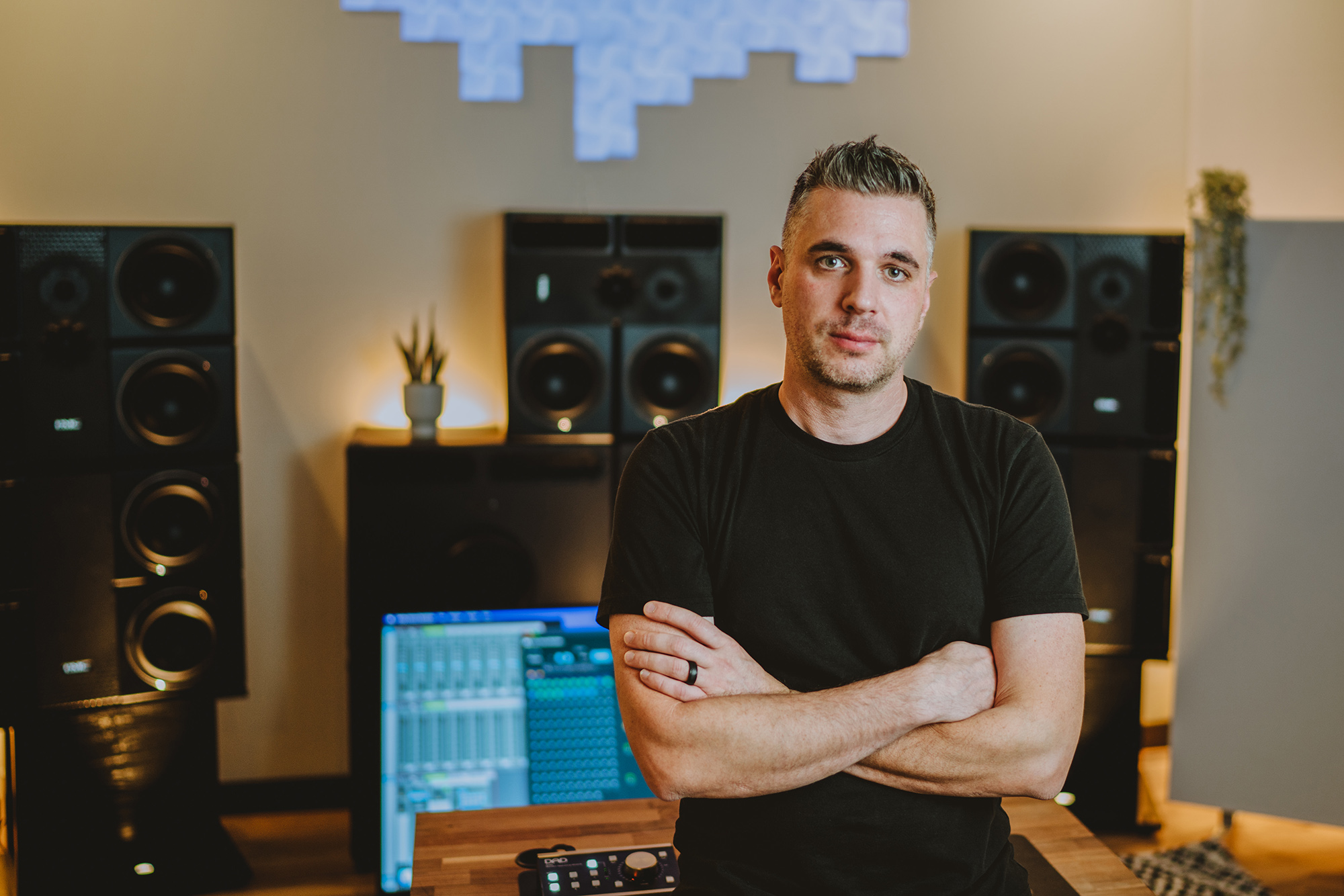
Sam Polizzi is a mixing engineer and producer specialising in immersive audio. Based in his custom-built 9.1.4 studio, he has become one of the go-to engineers for translating high-profile stereo rock mixes into Dolby Atmos, including recent work on Nickelback’s forthcoming best-of collection.
We spoke to Sam about his journey into immersive mixing, his collaboration with Grammy-nominated mixer Chris Baseford, and why LiquidSonics reverbs such as Seventh Heaven Professional, Cinematic Rooms Professional, and Lustrous Plates Surround have become essential to his workflow.
From Four-Track to 9.1.4
Q) Tell us a little about yourself. How did you get into music production, and how did Atmos enter the picture?
A) My dad’s a drummer, so music was always around. I picked up guitar around 13 or 14, and pretty quickly got obsessed with recording. I had a little four track Tascam setup in my basement and was recording every band I could find. I was playing in bands at the time, but honestly I was way more obsessed with recording than actually being in a band. I’d join bands, track them, then move on and do it again just to keep getting reps. Eventually nobody really wanted me in their band anymore… but they all still came to my parents’ basement to record.
That was kind of the moment where it clicked. I didn’t want to be the artist, I wanted to make records. That was really the soft start to my career. From there, I went to Full Sail for Recording Arts, and then came back and spent about six years as the main engineer at GFI Studios in Webster, New York. That was a huge part of my development. I was in the room every day, working with different artists, different genres, just constantly getting better and figuring out what actually makes a record feel right. Tony Gross, who owns the studio, was a big influence on me during that time and really helped shape how I approach engineering and production.
After that, I went freelance and started building things on my own. During the pandemic I started mixing for clients because nobody was getting together, and that kind of stuck. I still do production projects, but only if I really love it. Mixing is where I spend most of my time. I like finishing records and making them feel right.
The Atmos thing happened when I was recording and producing Lou Gramm’s unreleased material. When I turned the record in, the label asked, “Where’s the Atmos mix?” At that point, I didn’t have a workflow built for it yet, but I knew I was going to figure it out fast. I rented a studio about two hours away that had a PMC setup, and the engineer there helped me get up and running. From there, I started getting a lot of work because I was one of the few people doing it at the time. This was about five years ago, right when labels started requiring Atmos as a deliverable.
Q) What were some of the critical decisions you made when setting up your Atmos room?
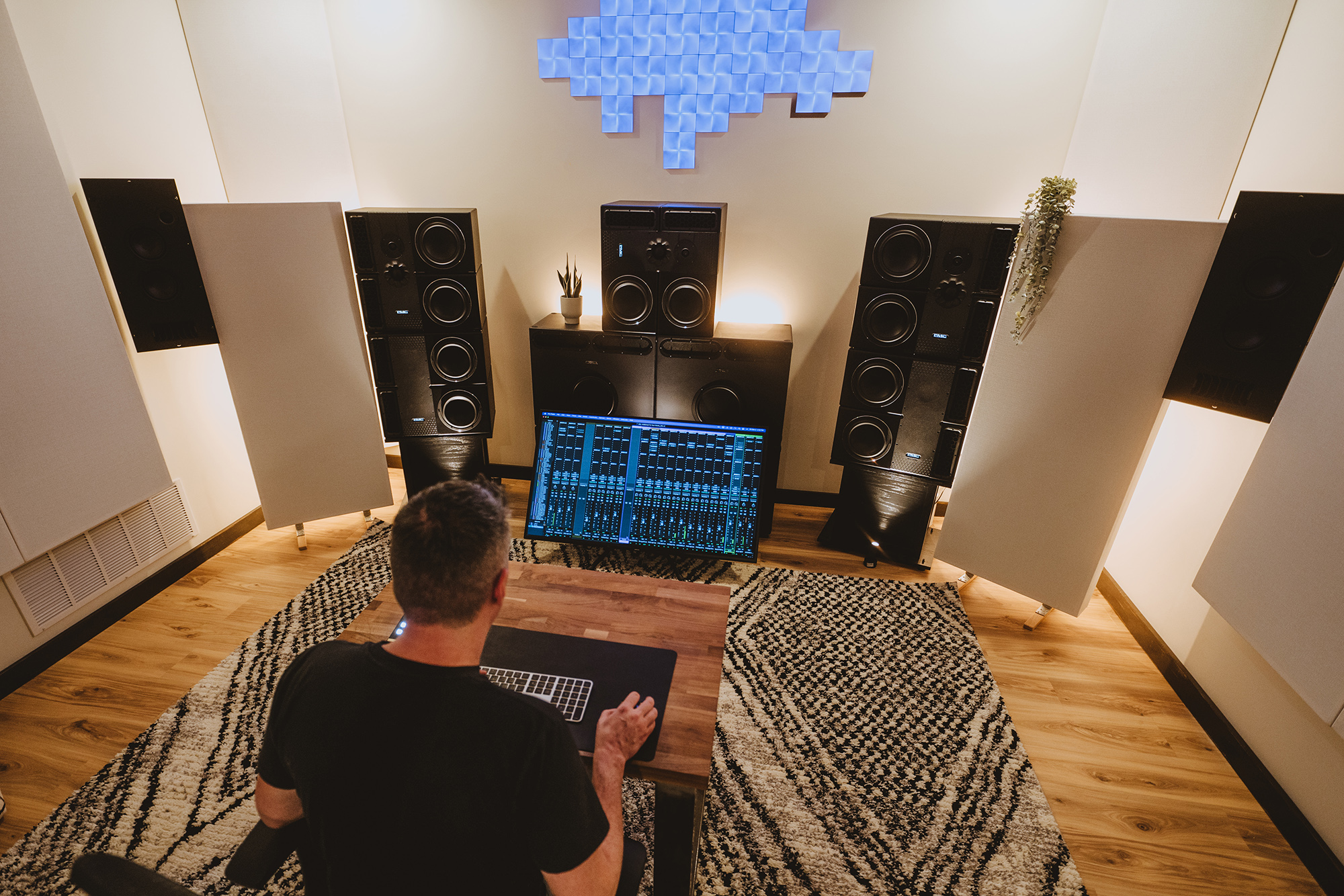
A) The biggest decision was getting the monitoring right because if you can’t trust what you’re hearing, nothing else matters. I built the room around a PMC system, with 8-2 XBDs as my mains and Ci65s for the surrounds. The goal wasn’t just to have a great Atmos setup, it was to have something that translates at a really high level for both stereo and immersive.
From there, the acoustics became just as important as the speakers. I completely rebuilt the room because I needed it to work for both. That balance is tricky. You’re not just building a surround room, you’re building a room that still has to make great stereo decisions. A lot of it came down to bass trapping, placement, and making sure the response was as accurate as possible across the entire system. Once that was dialed in, everything changed and I started trusting my decisions a lot more.
Then on the system side, the Avid MTRX was a huge piece. Being able to switch between stereo and Atmos instantly, with everything calibrated and level-matched, keeps me grounded in the stereo mix while I’m working in Atmos. At this point, I know exactly what I’m hearing when I’m working and that’s everything.
Q) With your experience as a musician and producer, is there something about immersive mixing where you feel that background helps in particular?
A) At first, when I started doing Atmos, I thought it sounded really unnatural to have things surrounding your head. Music doesn’t sound like that. When you go see a band live, everything’s in front of you, and you’re just watching what’s happening on stage. But once I started experimenting, I realized it’s not about recreating reality, it’s about creating an experience. The biggest shift for me was not having to carve space the way you do in stereo. In stereo, everything’s fighting for position. In Atmos, things don’t have to compete, they just live in different places. So I can keep the vocal exactly where it needs to be, and the guitars can live out to the sides without interfering. And when you get it right, it just opens up in a way that doesn’t exist in stereo.
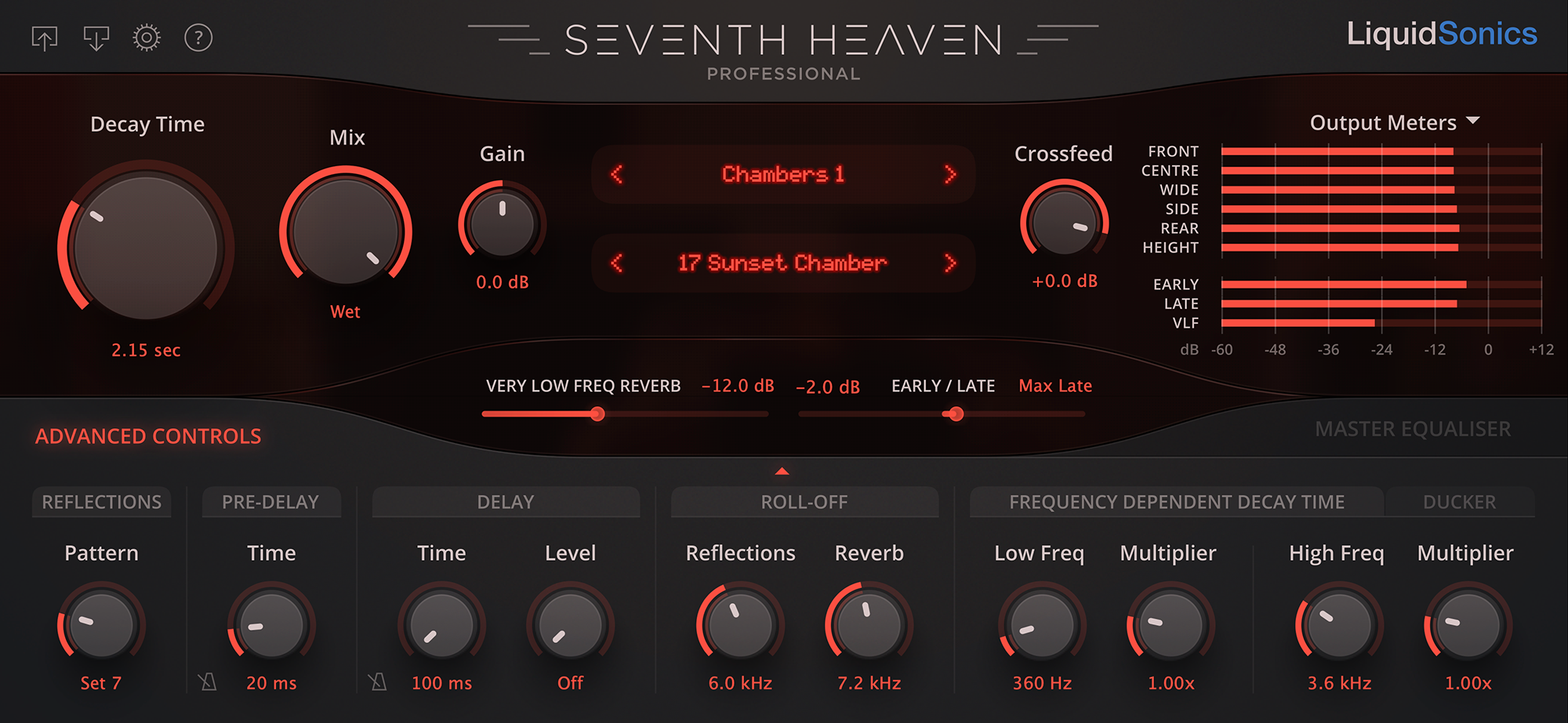
For the 3D space, Seventh Heaven Professional is my go-to for every vocal. Being able to put a vocal in that space, especially when I’m translating my mixes. I start with the Sunset Chamber preset, tweaked just the way I want it, and when I put my vocal through it, it just sounds the way I want. When I take that from stereo into Atmos, it’s the same reverb but surrounding you. It’s got more space, for lack of better words.
The Chris Baseford Collaboration
Q) Tell us about your collaboration with Chris Baseford. How do the two of you work together?
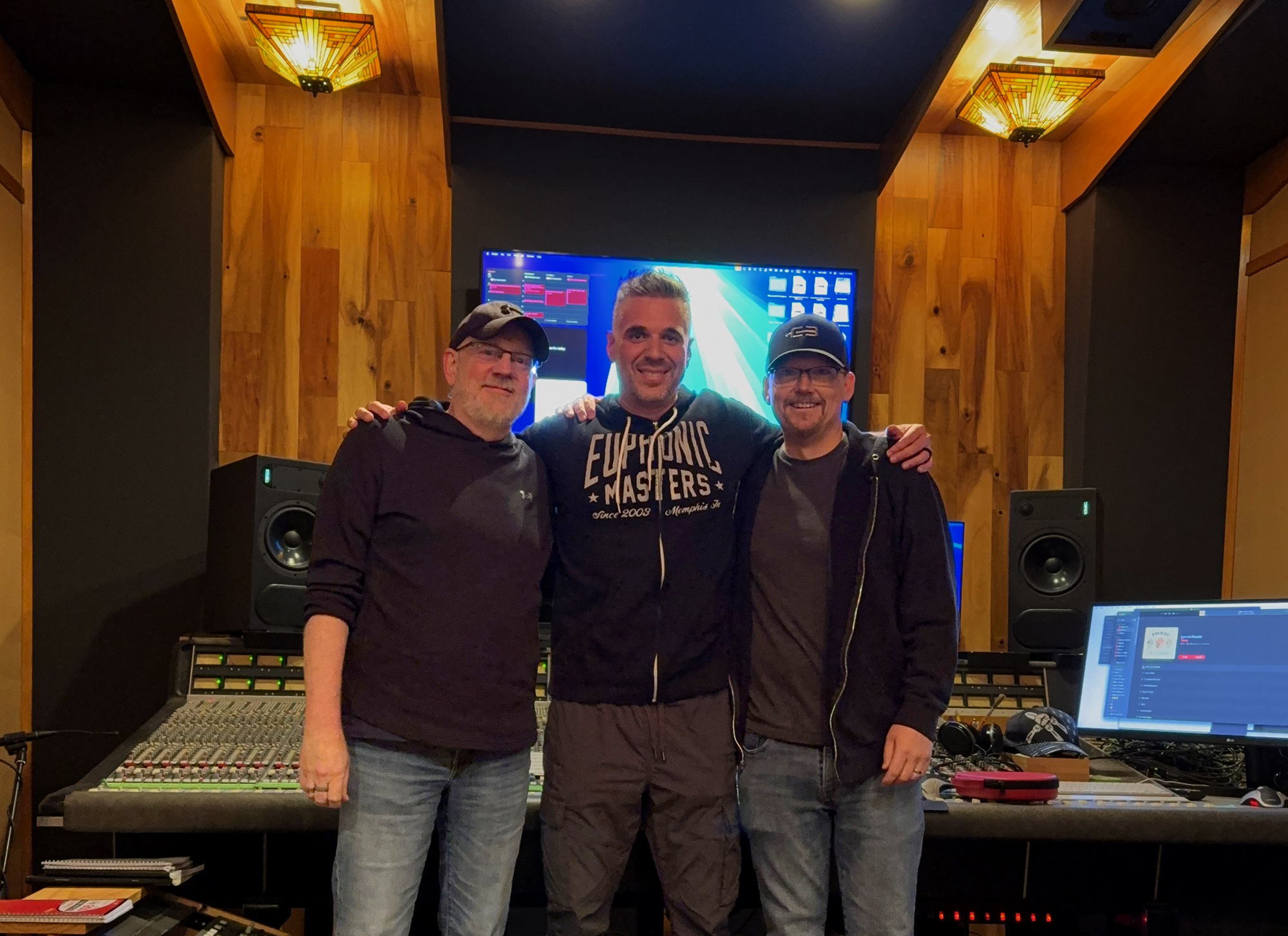
A) The first thing we worked on together was “Artificial” by Daughtry. The label had an Atmos mix done that Chris Daughtry wanted to remix, so he called me to fix it. Chris Baseford had done the stereo mix, so I pulled in his stems. Before I even listened, I could tell the mix was good just from how everything was organized and sounding.
So I built the Atmos version from that, and everyone thought it sounded great. After that, I reached out to Chris and said, “I really like what you’re doing, let me help translate it into Atmos.” From there, it just kept building. At this point, most of his Atmos work comes through me. We developed a process that keeps all the decisions made in the stereo mix, from him, the artist, and the producer but expands it into Atmos without losing what made it work in the first place.
Q) That process led to the Nickelback project?
A) Chris had done some immersive work before and said it was a really difficult process. When the Nickelback project came up, we decided to approach it together, he’d remix everything in stereo, and I’d build the Atmos from that. We didn’t have stereo mix stems, so he had to recreate the stereo mixes first, which is already hard. Then I had to translate that into Atmos while keeping everything exactly how people remember it, but at the same time give fans a new experience.
You can’t touch a massive hit like “Photograph” and not get every detail right.
We spent a lot of time on those details, and I’m really proud of how it turned out – they’re some of the best-sounding Atmos mixes I’ve heard in rock. It’s a best-of, volume one. The stereo mixes have been out a while, but the Atmos mixes were just released.
From Stereo to Immersive
Q) What considerations went into developing your process for translating stereo mixes to immersive?
A) My goal was to take as much off Chris’ plate as possible. He could focus on the stereo mix, send me stems, and I’d handle everything from there. The magic is in the stems, but more importantly, in how you spatialize them. It’s not just panning. When you move something out of the stereo field, the EQ feels different, the level shifts, and the dynamics change. You have to compensate for that.
Rock also relies heavily on compression and limiting, that’s part of the sound. Loudness isn’t just level, it’s tone, impact, and density.
So a big part of the process was figuring out how to keep that feeling while still working within Atmos constraints like -18 dB LUFS.
Early on, it took forever. I was bouncing mixes, converting them, checking them on my phone, making changes, and repeating that over and over. That’s part of why those mixes were so expensive at first, it was incredibly time-intensive. Once I could monitor spatial audio in real time, everything changed. Faster workflow, better decisions, better results.
Reverb Strategy
Q) Going from stereo to immersive, what’s your approach when it comes to reverbs?
A) Reverb is a huge part of how I build space in Atmos – that’s really what creates the environment around the mix.
For me, it starts with the vocal. The vocal lives in a 7.1.4 or 9.1.4 space, and that’s where the LiquidSonics reverbs really come into play. Being able to take something like Seventh Heaven and move it from stereo into a full immersive field changes everything. It’s not just sitting behind the vocal anymore, it becomes the space the vocal exists in. Everything starts in stereo for me. I’m already building the space with these reverbs, and then when I move into Atmos, I’m not reinventing anything, I’m just expanding it. That translation is a big part of why the LiquidSonics stuff works so well. Clarity is the most important thing, especially in rock. You’ve got dense mixes, and if the reverb isn’t right, everything gets smeared.
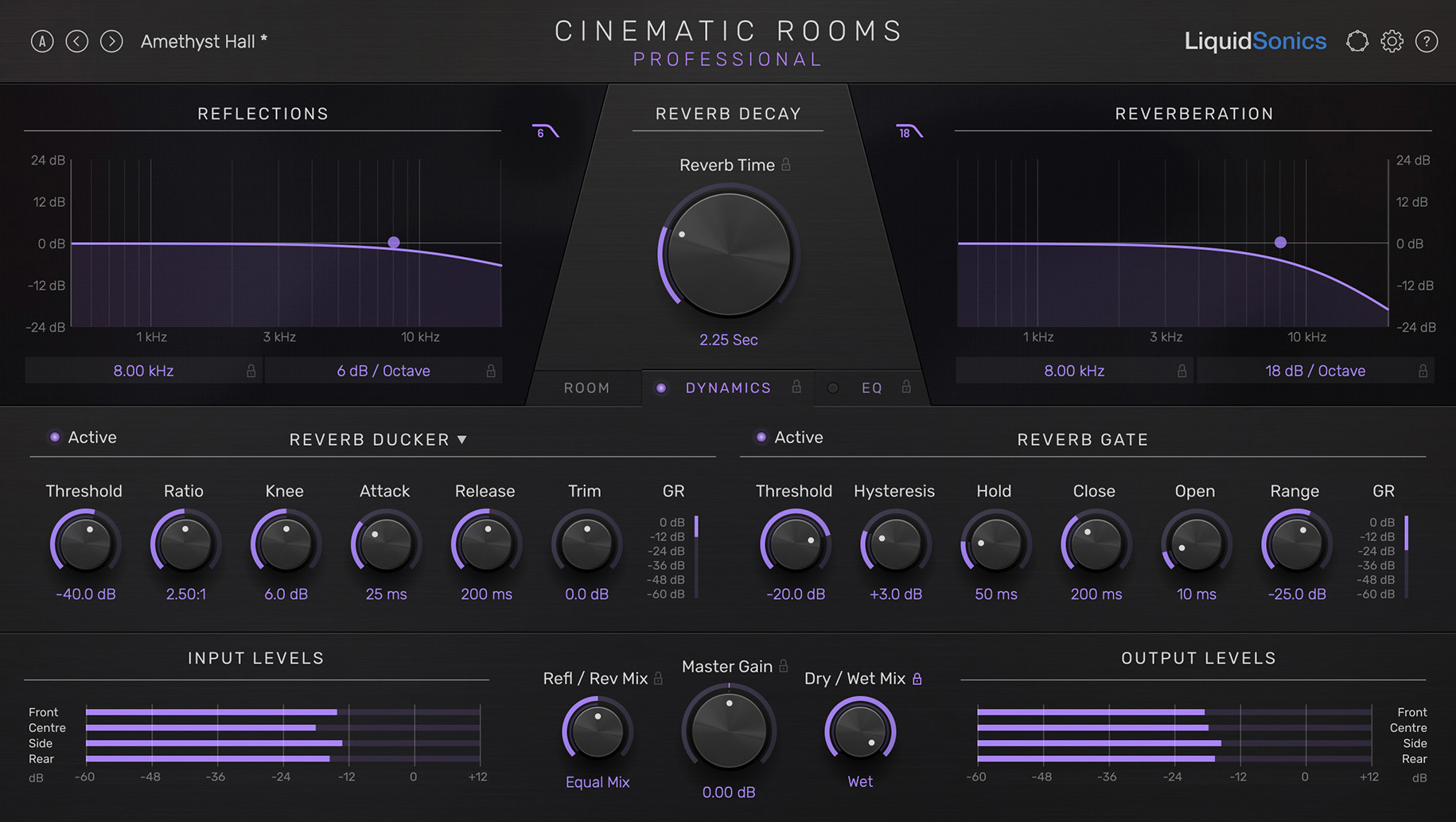
The ducking in the LiquidSonics reverbs is huge for me. I’ll push the reverb way too loud, bring the ducking up until it’s overcorrecting, and then pull it back until the vocal sits exactly where I want it, with the space surrounding it. Then I bring the level back down into the mix. That lets me keep the size and depth without losing impact. For drums, especially snare, Cinematic Rooms plays a big role in building that space, same idea, just shaping the environment around what’s already there. At the end of the day, everything I’m doing with reverb is about creating depth without losing clarity.
The LiquidSonics reverbs just make that easier – they give you space, but still let everything cut through.
Q) In your template, how many instances of Seventh Heaven, Cinematic Rooms, and Lustrous Plates do you typically run?
A) I have separate reverbs for almost everything I’d want reverb on. Looking at my template now, I use two Wide Room presets from Seventh Heaven Professional’s Rooms 2 bank on guitars. For drums, I’ve got the Large Chambers with a little Soundtoys MicroShift after it. Then for vocals, it’s Seventh Heaven with Sunset Chamber. The other vocal reverb is Cinematic Rooms Professional. I don’t have a custom preset saved for that, sometimes I’m just using Amethyst Hall because it sounds that good.
For drums and snare, I use Large Pro or Large Room XFD a lot in Cinematic Rooms Professional. In the ambiences, I love Heavy Ambience. In the spaces menu, I love the Scatter Church preset – it’s got a really cool sound and I’ve found myself going back to that one a lot. The Thickening setting in the Dom Morley menu is cool too. It just does something. I’ve put that on guitars, and it gives me something I can’t really get another way. I also do this thing in stereo where I have several parallel drum busses. On one of them, I’ve got Seventh Heaven. I started with a studio preset from the Rooms 1 bank, but I’ve tweaked the reflections and the roll-off, added a little delay, set the pattern to six, and I keep the VLF reverb all the way down.
Sometimes, if I get drums that were recorded in a bad room, I’ll just mute the original rooms and send them into that parallel bus instead. Before the reverb, I’ve got a couple compressors hitting pretty hard, compressing into the reverb, and then I’ll blend that in and use EQ to roll off some top so the cymbals stay out of the way.
So looking at my template, there are usually six or seven instances right off the bat.
Q) When do you reach for Lustrous Plates versus Seventh Heaven?
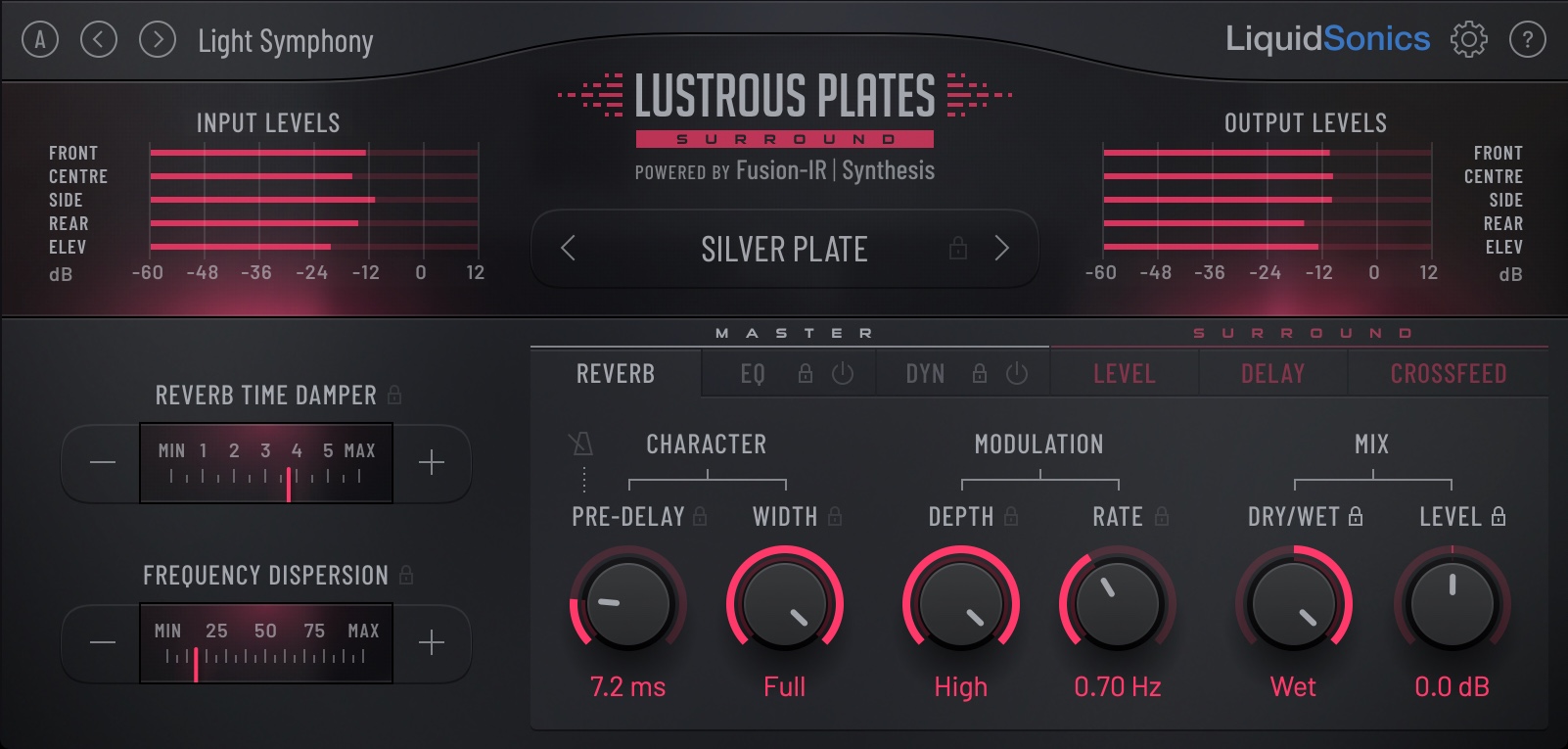
A) A lot of times, I’m using both. Seventh Heaven is my all-around, always-on reverb, and then Lustrous Plates is what I reach for when I want something bigger, like in a chorus or for accent moments. There are some really cool things you can do with those plates because they get a little gritty in the tail in a way that just works, especially in rock. Sometimes I’ll do a quick send on one word, almost like a delay throw, but using reverb. Other times, I’ll bring it in for the chorus or throw it on a guitar solo because it has a width and depth that the others don’t have, especially with that grit.
That Rhodium Plate is great, I use that one a lot.
I also use Lustrous Plates quite a bit on synths for the same reason. Even if there’s already reverb there, I’ll just “kiss” it with a little bit. It adds that extra bit of three-dimensionality without getting in the way.
Q) Beyond the sound quality, are there particular features in the LiquidSonics plugins that you find especially useful?
A) I use the EQ section on almost every mix. In Cinematic Rooms Professional, I mess with the multiplier a lot, and the proximity, which is really useful. With Atmos, as soon as you go from stereo into immersive, everything opens up and you end up with a lot more reverb. If you just turn it down, it doesn’t feel like the stereo anymore, but if it’s up, it’s too much. So you have to shape it. The multiplier is huge for that. It affects the reverb time, so I’m able to make the reverb feel less dense without losing the space. That’s something I’m constantly adjusting.
I also tweak the size and proximity a lot. I’ll pull the reverb more forward with proximity, and then adjust the size so it still feels controlled and not spread all over the place. Those features don’t really exist in other plugins in the same way, and that’s a big reason I keep going back to them. I’m used to how they respond, and they give me a level of control and tweakability that a lot of other reverbs just don’t.
Q) Do you feel there are particular qualities about LiquidSonics reverbs that make them especially well-suited for rock?
A) Especially with where rock is right now. There are just walls of guitars, and a lot of times it’s hard to get the vocal to sit right. We’re in a place where everything has a lot of reverb again… snare drums, vocals, everything. It’s kind of come back around. If you listen to a lot of Daughtry stuff, there’s a ton of reverb on his voice, that’s part of the sound, and it works.
The challenge is getting that kind of depth without losing clarity. If the reverb isn’t right, the vocal just disappears in a dense mix. That’s where something like Seventh Heaven really stands out for me, especially on vocals. It just sits in a way that makes it easy to keep the vocal present, even with a ton of stuff happening around it. You can still hear it clearly, but it’s not intruding on everything else. You can shape it however you want, make it warmer, pull the character out, keep it really clean and it gives you that flexibility. So in a dense, heavy mix, where you might have 20 or 30 guitars layered and having a reverb that gives you depth but still lets things cut through is everything. That’s where it really shines.
Monitoring and Translation
Q) What do you find most challenging about translating your immersive mixes across different playback formats?
A) As soon as you move things out of the stereo field, everything changes. The EQ curve isn’t exactly the same anymore, elements can get quieter or louder depending on where they’re placed, and the dynamics shift too. You’re not just panning, you’re changing how things feel. With rock, that gets even trickier because it’s such a compressed genre. You’re trying to hit loudness expectations, but Atmos is really about dynamics, and there’s a lot more headroom and sometimes it almost feels like too much. So it becomes a balancing act. It’s never going to sound perfect everywhere, but it can sound good everywhere. I try to stay as true to the stereo mix as possible without fighting what Atmos wants to do. At the same time, it should feel like a different experience, not a copy of the stereo, but an expansion of it.
Q) How do you maintain focus when switching between different playback formats?
A) I always reference the stereo mix. As long as the balance is close and I have not changed it enough to make it feel like something different, I am in a good place. From there, I prioritize based on how people are actually listening. Spatial Audio is first, because that is how most people are going to hear it. Speakers are second, and binaural is third.
Most of the time, the artist is approving the mix in Spatial Audio, so if it sounds great in the room but does not translate there, that is a problem. I do check binaural, and if something is obviously off, it usually means something is wrong with the mix overall. Most of the time, binaural is pretty close to what is happening in the speakers anyway. As long as I can get it feeling right on speakers and in Spatial Audio, binaural usually just falls into place.
Getting Creative
Q) Most of the time, your clients want an immersive mix that’s essentially a translation of the stereo mix. But do you ever get the brief to go wild?
A) Yeah, definitely. There are artists who are really into this technology and curious about what you can do with it. In those cases, I’m doing similar things, but I’ll push it further. I’ll have things moving around more and really take advantage of the space. Pop music is kind of made for that, with all the synths and sound effects that can live around you. With rock, it is a little different. When you have drums, bass, a couple guitars, a vocal, background vocals, and maybe a keyboard, it is harder to go too crazy without it feeling wrong. You are not going to just throw a guitar behind you for no reason.
But there are still moments where you can push it. For example, if there is a solo with a slide, I might have that spin around the room really fast. Stuff like that can create a moment without breaking the feel of the song.
The Nickelback project was a different approach. We looked at it as, people have been listening to these songs forever, so let’s keep the stereo balance intact but give them a completely different experience so it still feels fresh. On “Gotta Be Somebody”, there is a tremolo guitar in the beginning. I have it start in the center and then move all the way around your head before landing back on beat one when the vocal comes in front again. There are also transitions that go over your head or move from the back of the room into the front and into the center.
The whole record uses Cinematic Rooms Professional. At least two instances, because Chris had his own reverbs already in the stereo mix.
I started with those and then enhanced them with Cinematic Rooms on almost everything. Lustrous Plates is on the snare on those tracks. At the end of the day, it is about giving people an experience, not just a different version of the same mix.
Q) On those creative decisions, were those yours alone or a collaboration with Chris?
A) Mostly, I handled those decisions. The process was that Chris sent me the tracks, I built the mixes here, and then I flew to Nashville where we finalized balances together. We spent three intense days at Skidd Mills’ studio, really dialing everything in. Some of it was definitely collaborative – he had his ideas, I had mine – but a lot of the more creative or aggressive moves I would do first, present to him, and then he would make sure everything still lived in the world of the original stereo. His ear is unbelievable. He knows those songs so well from working on them for so long, so it was very easy for him to say, “This doesn’t feel right, we need to go back and tweak it.” After that, we went back and forth for another couple of weeks refining everything. It was a lot of work, but it was fun. I’m really excited for people to hear that record.
Q) Has doing immersive work changed how you approach stereo mixing?
A) Yeah, I think it has. Someone asked me recently if my stereo mixes have improved because of doing Atmos, and I really believe they have. When I am working in Atmos, I am not thinking about cramming everything into a small space. I am thinking about how each element can have its own place in the room. That perspective has carried over into my stereo mixes as well. And on projects where I know the music is going to end up in Atmos, I am definitely thinking about it during production. If we come up with a keyboard part or some spacey guitar idea, I am already thinking, I know where that is going to live. Same with background vocals, I am already placing them in my head. It starts influencing decisions early on, and I think the work is better because of it.
Q) Are there any upcoming projects we should keep our ears out for?
A) I am working with Jon Dretto right now, and I handle both the stereo and Atmos mixes on his music. He already has some really cool releases out, with a few more songs coming out this year. It is one of those projects where there are not a lot of rules, which makes it really fun creatively. I produce it with a friend of mine, Johnny Cummings, and then I take it through the finish line on the mixing side.
I also just tracked guitars for Chaka Khan’s new record, which was an amazing experience, and I am working on some really great projects this year across both stereo and Atmos. It feels like things are building in a really exciting way right now.
Advice for Engineers
Q) What advice would you give to stereo mixers looking to expand into immersive formats?
A) Talk to your clients and educate them. You have to, because most of the time they do not really understand what they are hearing yet. I will tell them up front, this is going to be lower in volume than what you are used to. Sometimes I will even turn it up a bit for their first listen so they are not thrown off, and then once it gets mastered, it comes back down to where it should be. And you need a speaker system that you trust. I do not think I would be able to do the work I do without mine. You can do it in headphones, but it is hard. Judging the LFE, placement, EQ, all of that becomes a lot more difficult. There is also a bit of an old school mindset for me. I like feeling the music. I want to feel the low end hit me in the chest and feel the vibration of it. For me, the speaker system is everything.
