
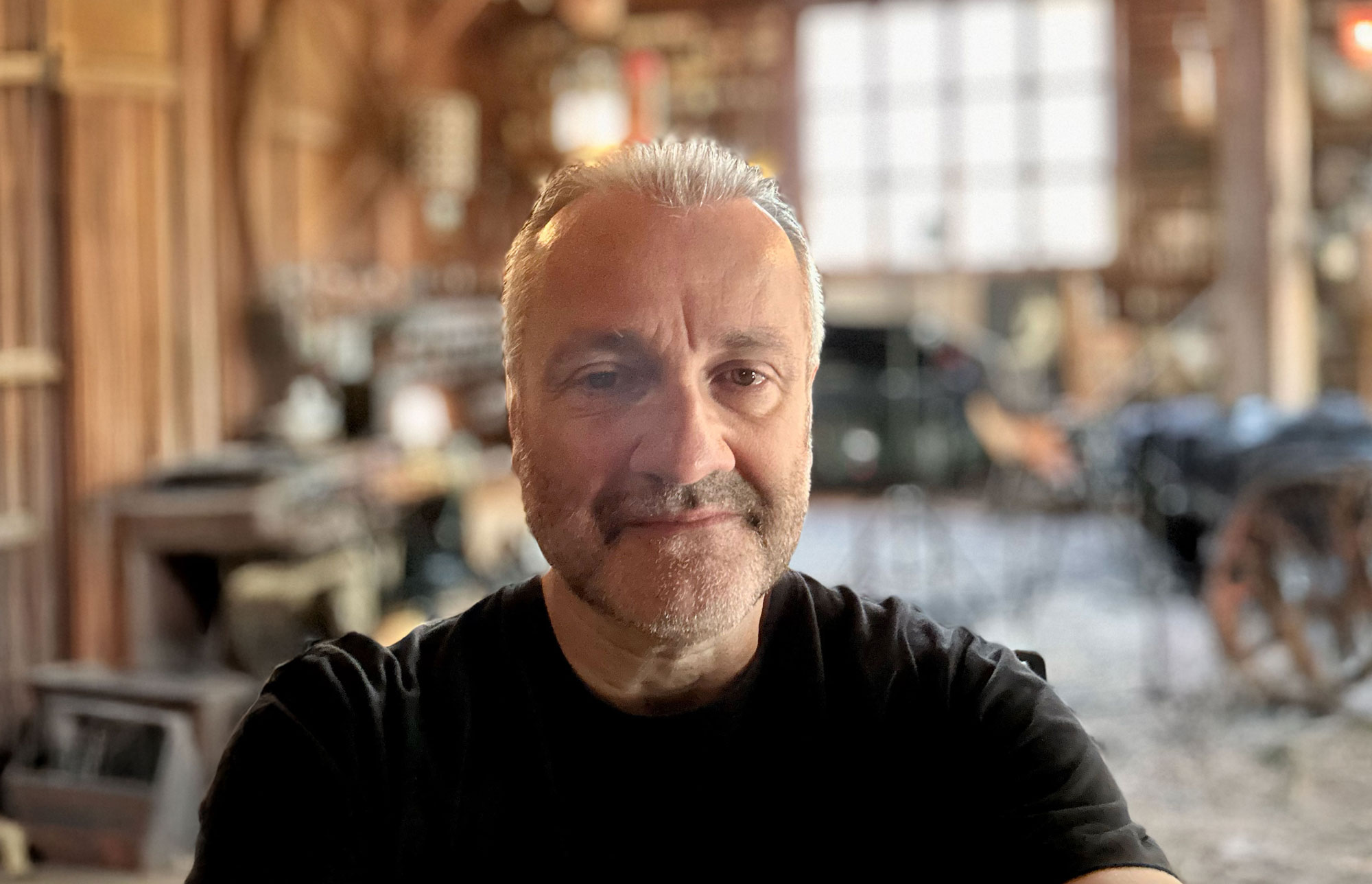
Robert L. Smith is a New York City record producer and recording engineer who works across recording, production and mixing, with credits that range from charting pop to film and television. His career spans the globe, collaborating with legends from every country. Some recent highlights include “The Get Down” for Netflix, with director Baz Luhrmann, netting a # 1 Billboard single “Telepathy” with Christina Aguilera featuring Nile Rogers and Sia; Tina Arena’s # 2 album “Love Saves”; Oscar and Grammy wins for the documentary “20 Feet From Stardom”; an ongoing work with Sir Paul McCartney; production with Peter Asher for Steve Martin’s latest “The Long Awaited Album” with the Steep Canyon Rangers, as well as collaborating with Alice Cooper on Pink Floyd’s “Wish You Were Here” Symphonic album.
Robert runs his production company Defy Recordings, and is currently working on his memoir, as well as helping artists navigate the ever-changing tides of the music industry.
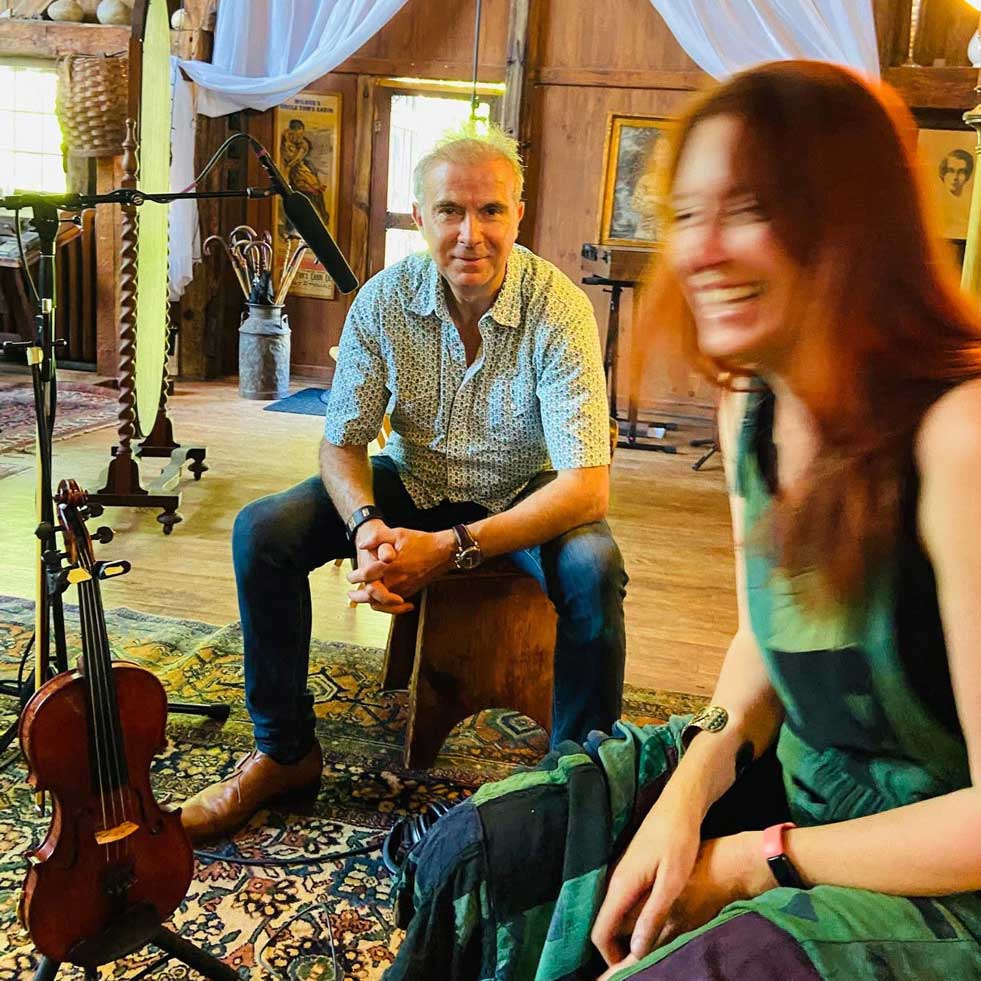
That long, varied background and breadth of experience was crucial when Tara Novak and Ciaran Nagle of Ishna Music brought Robert into a project in the planning for years: “Sli Amach: Way Out” a Celtic record designed to feel live, communal and rooted in place with a modern, highly polished sound.
Originally, the plan was to record in the musicians’ home. Robert drove up in spring to assess it, a routine step before committing to a remote setup. The room had a small Steinway and the comfort of familiar surroundings – just perfect; all except for a busy nearby road.
With gentle ballads in the set, he questioned how realistic it would be to keep unwanted noise out of multiple microphones or the practicality of editing it away in post; “How am I going to get the truck sound out of all the mics, I mean, iZotope RX’s can work miracles – but how much time do I want to spend doing that?” recalled Robert.
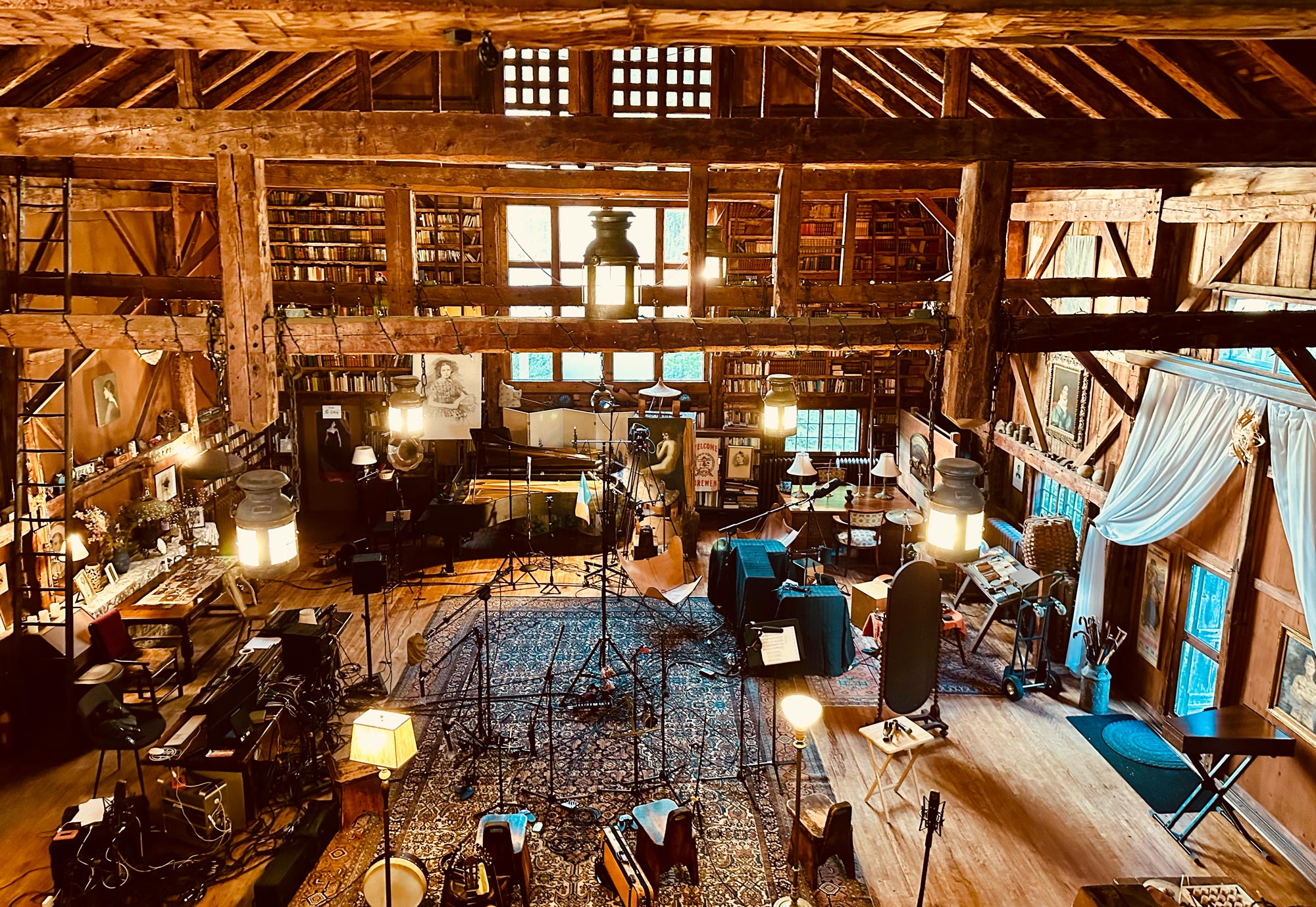
A better option emerged quickly through friends in the local community; Cold Comfort Farm in Monadnock Region of New Hampshire, a barn used as an events venue, just ten minutes away, with high ceilings, generous dimensions and an old nine-foot grand piano already inside looked like the perfect solution.
Immediately Robert knew the room had something special. “It was like walking into a Harry Potter movie,” he said, “there’s paintings everywhere, books floor to ceiling that probably haven’t been touched in 80 years – we needed to do it in this room”. It truly felt like the kind of place where music could be recorded true to its celtic origin.
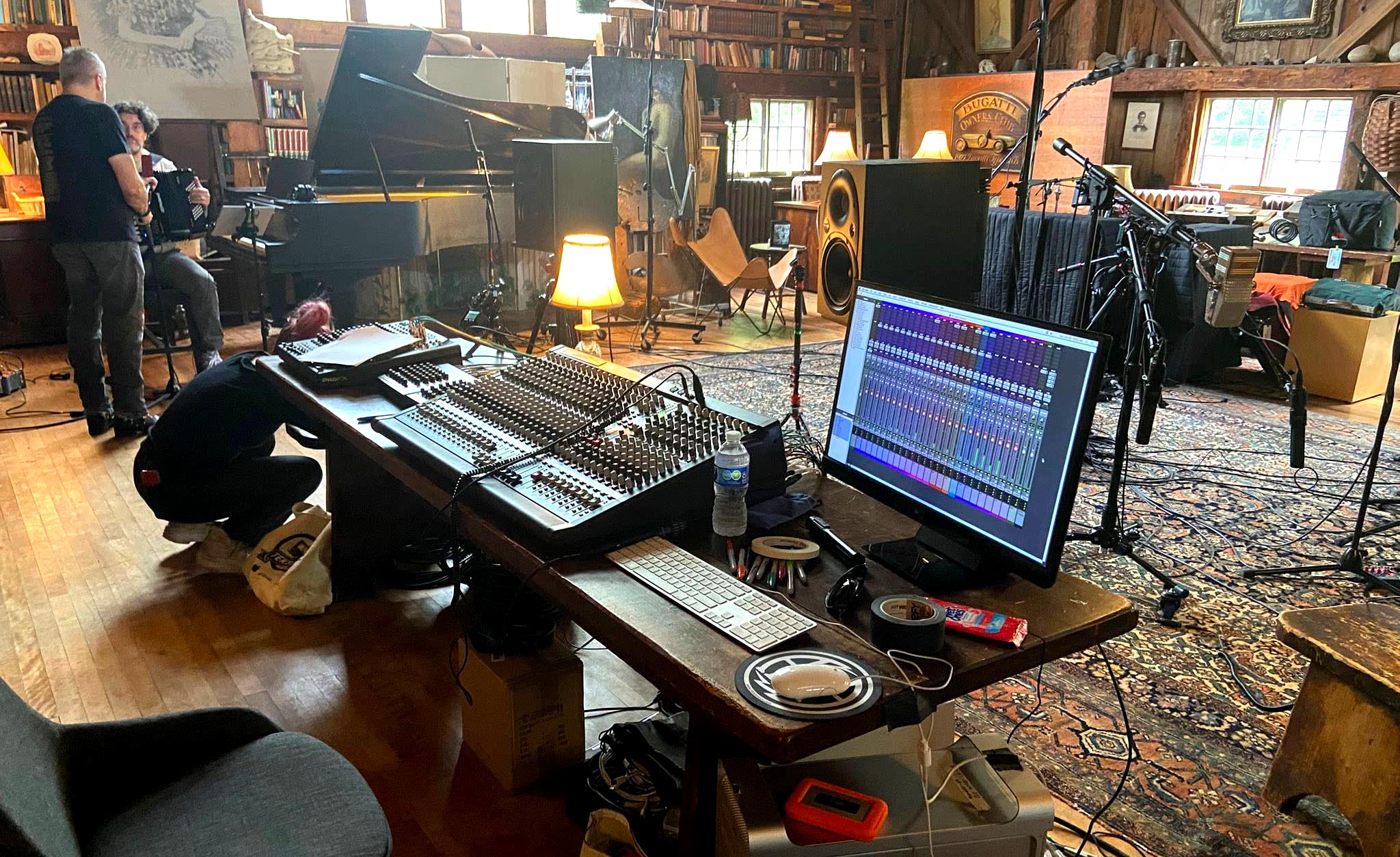
Turning that atmosphere into a workable studio was another matter, of course an events-focused barn in the countryside has little to no recording infrastructure. Robert rented a full Pro Tools rig and an analogue Midas console, and he brought an extensive selection of microphones from his collection.
He deliberately resisted building a complex chain though – “No outboard gear, it was just microphones into the desk, straight into Pro Tools.” Alongside the close mics, he set up multiple room microphones to capture the barn’s natural reverberant character, even floating the idea of a potential Atmos mix as an experiment down the line. All was set.
The week of the session then collided with a heatwave on the mountain. The barn had no air conditioning, and Robert describes heat as the one condition that reliably breaks him down. “Heat is my kryptonite,” he said. “And man, I just crumbled.” The first day took 14 hours, largely swallowed by building and wiring the studio before the recording even began. Once it did, humidity became part of the sonic picture as well as the physical strain.
Looking back at the photos now, he says the toll is written all over his face. “Every picture I look kind of miserable because I’m just dying,” he laughed, describing how he lived off a constant gallon jug of water. These conditions didn’t only test Robert and the performers’ endurance, the heat and humidity also had an impact on the sound of the room too. “They’re playing in soup, relatively speaking,” he said. “Sounds weren’t traveling as they normally would because they’re being wrapped in a wet blanket of thick air around them.”

During the sessions the musicians were arranged to preserve communication and feel. “It was like a semicircle and each musician was within five to six feet of each other,” Robert explained. There were no punches, only full band takes. “By the third song, you’ve figured out your balance is exactly right, and you go back to those first songs you tracked and those takes were always better” he said. “Luckily my mic choices, which primarily were AEA and Ohma ribbons, worked out perfectly,” he said. Vocals were captured with Sennheiser shotguns, a practical compromise in a live setup where everyone was so close. Although bleed between close performers was unavoidable it added an unmistakable sense of cohesion to the recordings.
Despite the challenges, the recordings came back stronger than Robert expected. Back in New York, listening in his studio, he had the reassuring moment every remote engineer hopes for. “I basically jumped out of my seat at how good it all sounded,” he said. “I really captured it right”.
The complications arrived during post-production. Ishna’s aesthetic goal was specific: keep the live, social energy, but deliver the precision and finish of a modern, highly produced release. Although Celtic music is often all about capturing the vibe on the day, “They wanted certain sounds; they had their reference music,” Robert recalled. As the edits became more detailed over time, the barn’s room captures began to work against the process.
Robert describes editing at a scale that would be unremarkable in many studio recording sessions, but is unusually demanding in a live acoustic project. “The editing was akin to what we’d do on a classical album” he said. “And at the same time once we saw how well the isolation worked, we got even more discerning, doing edits that one could do on a studio recording.” That kind of precision made the room mics increasingly difficult to use without exposing seams. Swapping sections between takes, tightening moments where a player might rush, and making word changes all leave audible fingerprints in a continuous ambience track.
The more the record moved towards the band’s ideal presentation of their work, the less the barn’s room microphones could be used cleanly; “I’m having less opportunities to use my whole six microphones of ambience,” Robert lamented, “it kind of got to a point where it’s like, look, I’m just going to have to mute them.”
At that stage, the record faced a difficult moment of engineering tension. Lose the natural room, and degrade the sense of musicians sharing the same authentic space. Keep the natural room recordings, and the edits would begin to show too clearly. Either would be an unwanted distraction in immersion for the listener. Robert’s only solution was to lean into a high-quality artificial reverb that could survive the edits while keeping the room’s true aesthetic intact.
“That’s where I dialled up Cinematic Rooms and Seventh Heaven,” he said. Rather than treating reverb as a finishing touch, he made it structural. He combined Seventh Heaven and Cinematic Rooms as the primary space for the album, and he committed early. “I did a mix using the Amsterdam Church and the Concert Hall presets,” he said. “That was the reverb for the entire record, and copious amounts of it.”
It quickly became a foundational element of the sound for the album. “I started that with the rough mixes when we were editing and it sounded great and they loved it and we just never really took it off,” Robert said. “It just stayed pretty much right from the beginning.” He also acknowledged it pushed him beyond his usual restraint. “It’s more reverb than I generally would use,” he said, but he frames it as a direct response to the production reality. “It really helped because of my ambient mic plan kind of going away,” he said. “I needed something else to do it.”
What everyone responded to most was the natural character of the Seventh Heaven reverb; “It’s just the colours really that I love,” he said. “There’s a color to it that is really flattering to the source.” Turning to Cinematic Rooms, he describes it as a kind of finishing that doesn’t feel like an overlay so much as a completion, “filling in sort of the nooks and crannies in the spectrum” and making the record feel like one continuous world even when the edits are intricate.
Perhaps the clearest sign it worked is that the band never seemed to notice the point at which the barn itself stopped doing the heavy lifting – the synthetic reverb completely ‘sold the space’. During the process “they didn’t even really hear the room mics on their own,” Robert recalls, “so the fact that they didn’t even question what they were hearing, I thought that was very interesting.” The record still sounded like players together in an appropriate and totally coherent setting, but with a level of engineering finesse that the band felt represented them at their finest.
For Robert, that is the quiet measure of success in a project like this: a live session that survives ambitious editing without losing the illusion of shared air, and a ‘reverb rescue’ that holds the story together when the real room can’t be there.
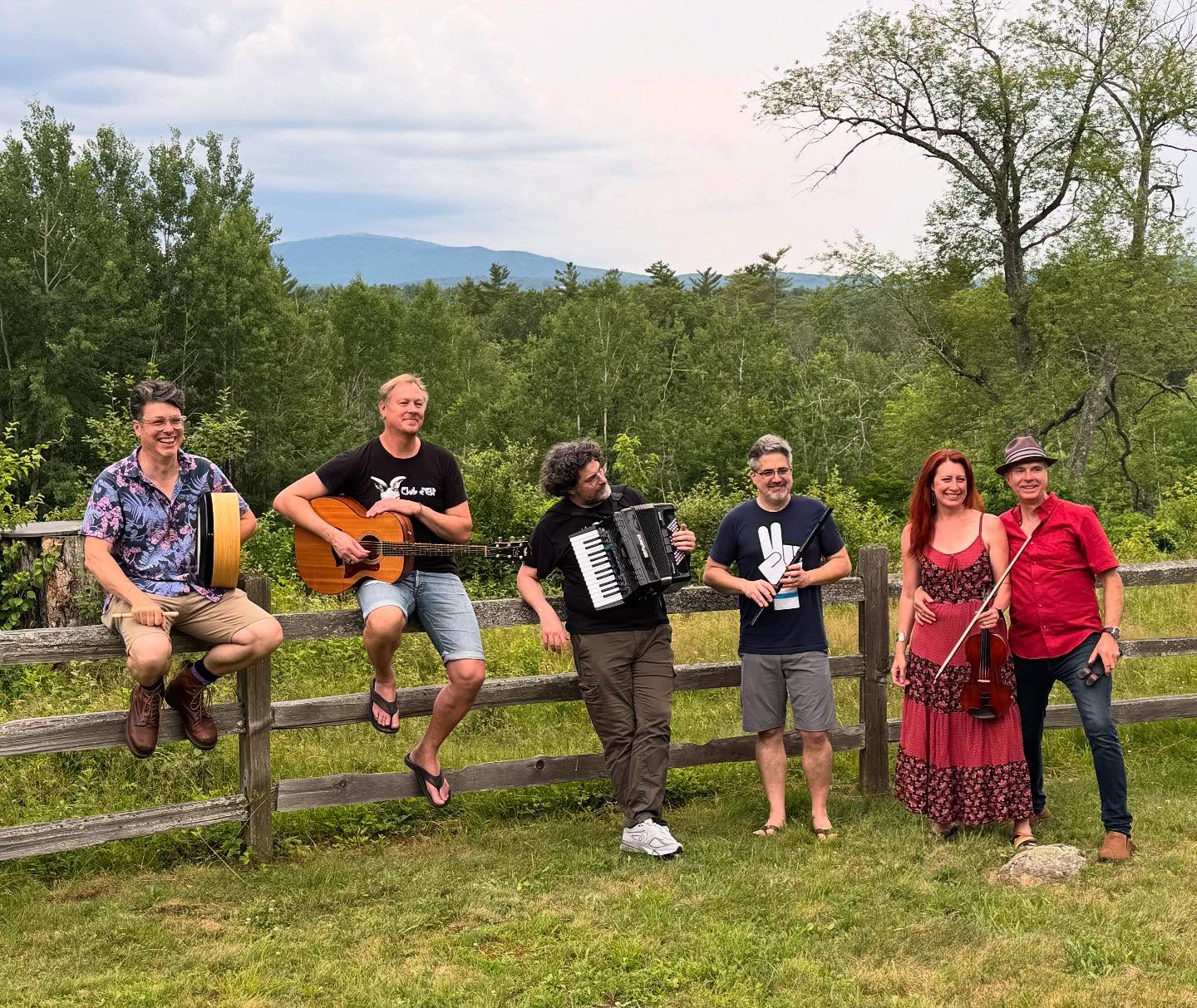
Huge thanks to Robert L. Smith for taking the time to talk us through the project, and for sharing these fascinating insights in such generous detail. You can find out more about Ishna, Robert and Defy Recordings using the links below. All LiquidSonics reverbs discussed here are available now from the LiquidSonics store.

Ishna
Ishna is a Boston-based contemporary Irish folk band, exploring the traditional repertoire of Ireland within the context of a global setting. It is fronted by husband-wife duo Ciaran Nagle and Tara Novak (both of Riverdance and The Three Irish Tenors).
Their debut album “Slí Amach: Way Out” releases on Jan 6, 2026.
Links: Web | Instagram | Slí Amach: Way Out

