
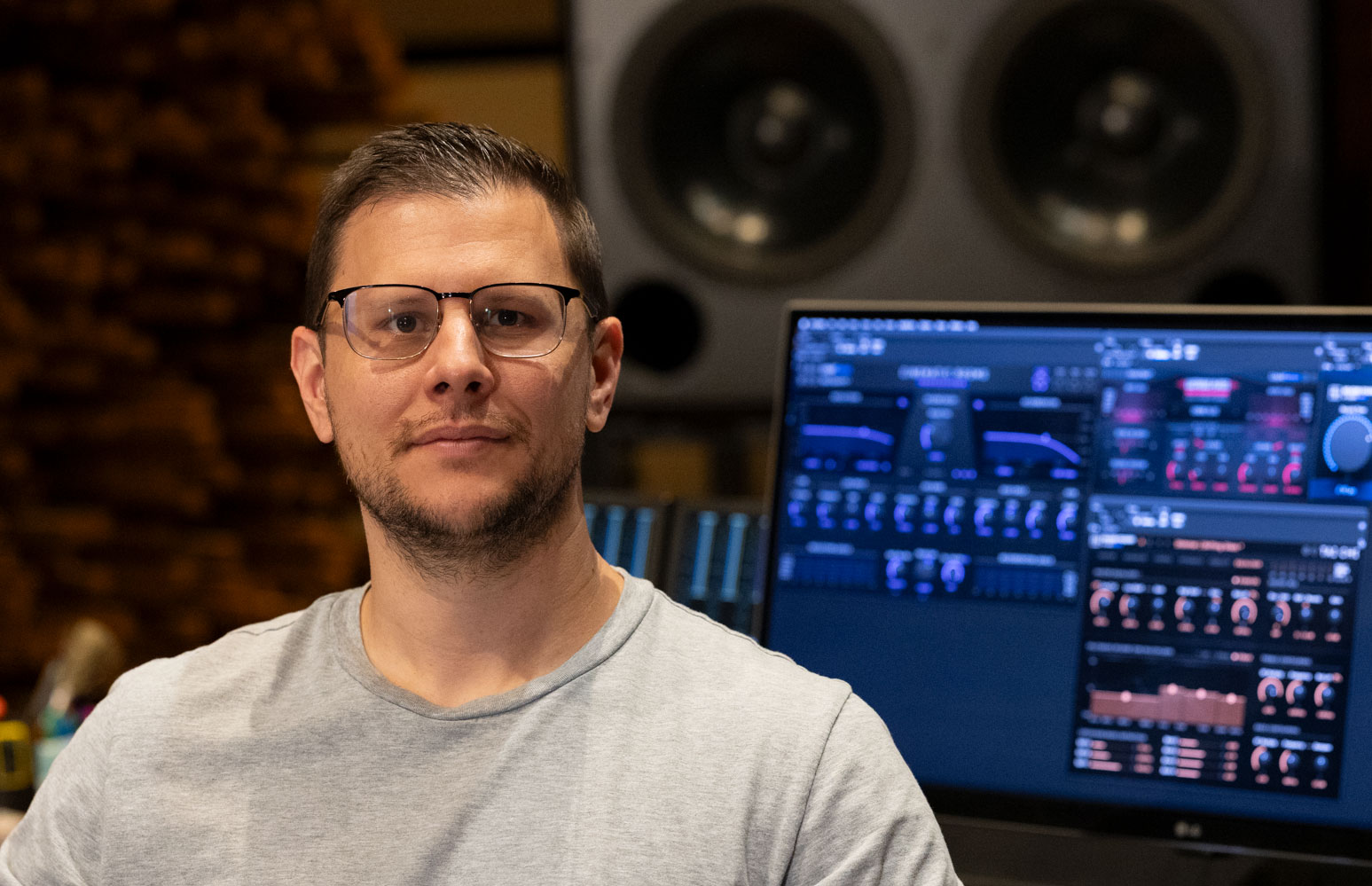
Based in Nashville, Ryan Sanchez is a score mixer, audio engineer and owner of Echo Lane Music. His credits include a wide variety of films, over 600 episodes of television, and bestselling video game franchises such as God of War.
A longtime collaborator with composer Bear McCreary and his Sparks & Shadows team, Ryan mixed season two and three of The Lord of the Rings: The Rings of Power, helping bring together the orchestral, vocal and instrumental elements that give the series its distinctive musical character.
In this article, we explore how he brought together recordings from around the world for the highly anticipated third season, using LiquidSonics reverbs to create a cohesive orchestral sound while bringing some of Middle-earth’s more fantastical musical elements to life by incorporating creative reverb treatments.
There and Back Again
After briefly touching on The Lord of the Rings: The Rings of Power during our visit to Pinewood Post Production earlier this year, we were pleased to have the opportunity to revisit the series with score mixer Ryan Sanchez, who shares his experiences working on Bear McCreary’s latest project and how LiquidSonics reverbs helped bring its many musical elements together.
McCreary draws on a wide range of traditions, with unusual instruments and vocal techniques helping to give the different cultures of Middle-earth their own identities. His writing process is highly detailed, with carefully developed demos that communicate much of his intended balance, tone and acoustic character before the musicians begin recording that need to translate into the final mix.
For the third season, the score brings together an extraordinarily varied collection of orchestral ensembles, choirs and soloists recorded around the world, each contributing their own distinctive sounds to the musical landscape of Tolkien’s Middle-earth.
The main strings, brass and woodwinds were recorded at AIR Studios in London, with the choir at Vienna Synchron Stage in Austria. A host of specialist percussionists, vocalists, woodwind and string players contributed performances from other locations, bringing an impressive range of instruments and musical traditions into the mix.
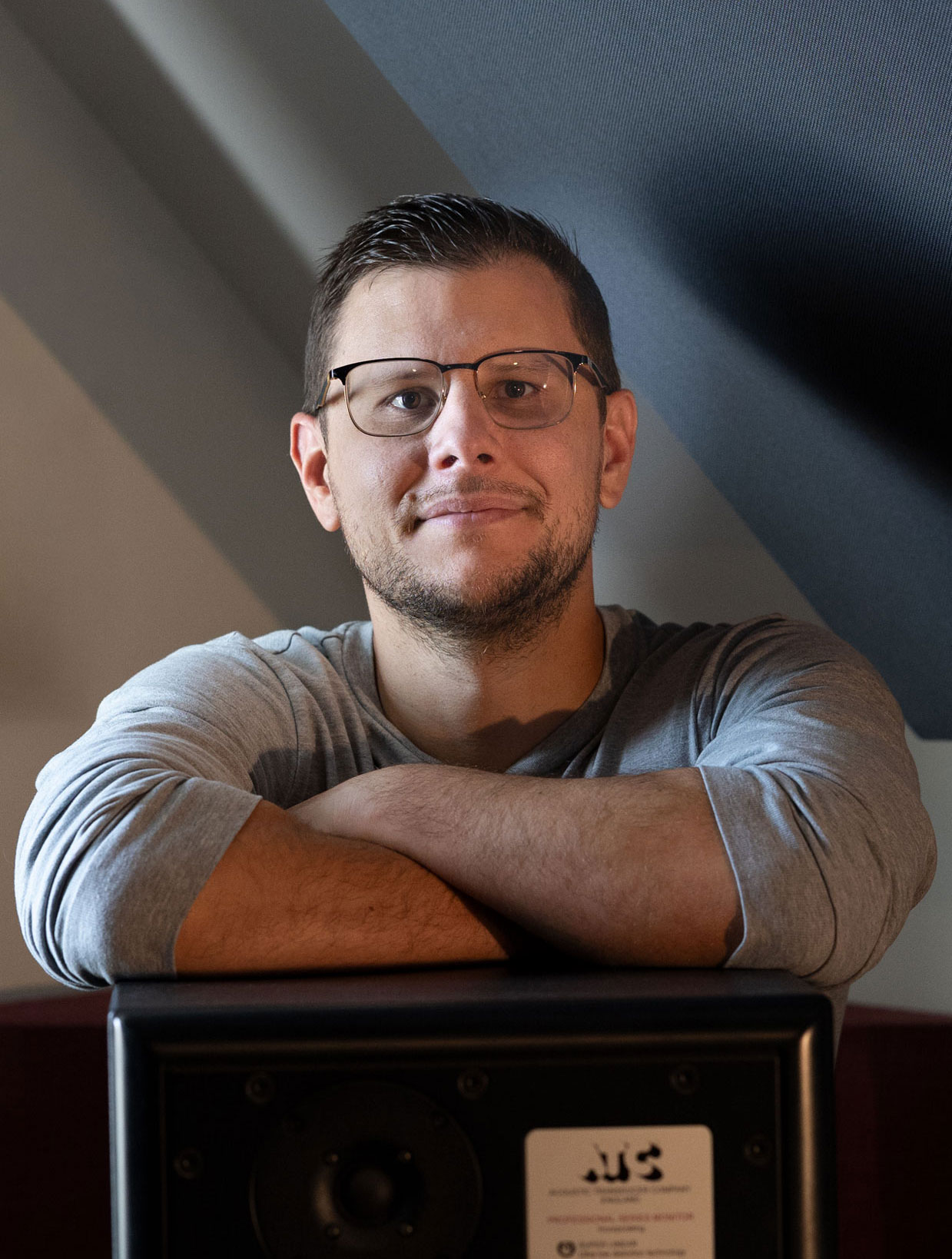
Bringing all these recordings together fell to score mixer Ryan Sanchez, whose challenge was to create a cohesive sound across the different ensembles and recording environments while preserving the individual character of each performance.
“Working on a score as large as Rings of Power naturally posed some unique challenges,” Ryan explains. “Once everything was recorded and edited, my responsibility was to blend everything into the world of The Rings of Power.”
Ryan has worked with McCreary’s Sparks & Shadows team for 14 years, and his responsibilities on The Rings of Power have grown with each season. Having contributed as a score editor on the first season and co-mixer on the second, he stepped into the role of lead and sole score mixer for season three.
In his account of the season two production, McCreary praises Ryan’s ability to “balance all these disparate elements together seamlessly into a unified whole”, a fitting acknowledgement of the skill and understanding behind his growing responsibilities on the series.
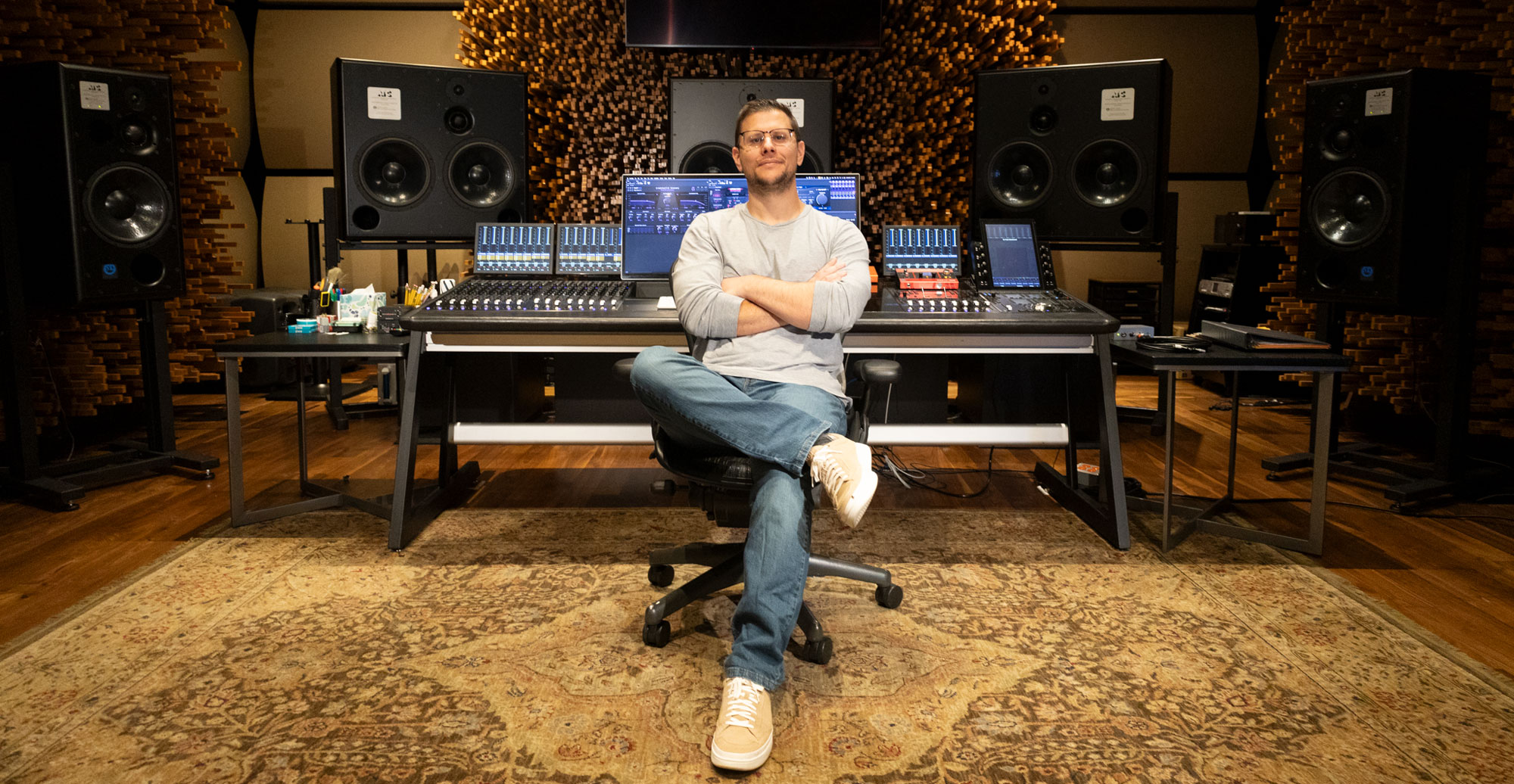
For the latest season, Ryan developed his mix template at Blackbird Studio C in Nashville.
Located in the heart of Nashville’s legendary neighborhood Berry Hill, this iconic studio is steeped in country music history. Some may not realise just how diverse the work taking place within its walls has become.
Blending its rich musical heritage with the demands of modern audio production, Studio C demonstrates that Nashville’s creative influence extends far beyond country music.
“I love being able to work in a new environment when I’m building the mix template that I’ll be working with all season. I find Blackbird to be a really inspiring studio that naturally sparks creativity the moment you step foot in the door.”


Ryan then carried out most of the mixing from his home studio from there. Although the musicians had recorded in very different surroundings, one particularly well known studio provided the acoustic reference point for bringing the score together – Lyndhurst Hall.
“The first thing I reached for is Cinematic Rooms Professional. It let me dial in an extremely detailed, immersive soundscape that every element of the score would live in.”
“Since the orchestra was recorded in the stunning AIR Studios in London, my Cinematic Rooms settings were meant to allow all the other elements to feel like they’re sharing the same space as Lyndhurst Hall.”
With a common acoustic foundation established, some of the individual recordings needed additional treatment before they could sit comfortably alongside the orchestra. Many of the soloists had been close-miked in smaller studios, sometimes delivering mono recordings with little natural sense of space providing a somewhat blank canvas in terms of the space to work with.
As Cinematic Rooms is often used as a glue to bring distinct spaces together into a cohesive whole, this affords some latitude to use a wide range of reverbs that play to their unique strengths. “I found that HD Cart was a huge help when something was recorded in a tighter space, or when a sound didn’t quite gel with the sonic palette,” Ryan explains; “Soloists often recorded very close miked in smaller studios, so inserting an instance of HD Cart before sending to Cinematic Rooms really helped spread the stereo image, especially if they were recorded mono.”
HD Cart provides a unique hue in the palette of reverbs in the LiquidSonics portfolio. We can trace HD Cart’s lineage to an evolution of the classic Random Hall algorithm which remains beloved for its colour and characteristic spin/wander modulation – “It is so good at livening up a recording,” emphasised Ryan.
Among the more unusual elements of the score is a Screaming Men’s Choir recorded in Finland.
McCreary had previously worked with the Finnish ensemble Mieskuoro Huutajat on the second season, and Ryan found HD Cart useful for these new recordings too, adding depth and width before placing them into Cinematic Rooms.
On a production of this scale, creating a believable orchestral space was only part of the job. With McCreary drawing on the fantastical world of Tolkien, Ryan also had opportunities to experiment with treatments that departed from the natural sound of a traditional recording venue.
While in many scenarios early reflections are key to selling the space, plate reverbs still feature in many score mixing workflows because of their immediate density which can provide a useful contrast to more natural acoustic build-up. “While I used Cinematic Rooms for a lush, natural reverb, Lustrous Plates gives me a shorter, bright ambience that helps liven up vocalists and lighter percussive elements,” he explains.
For many years mixers have leaned into more creative reverbs when working with large vocal groups and electronic sounds to help them incorporate supernatural effects like chorusing and shimmer.
Tai Chi, our take on ensemble reverb, leans heavily into reverb modulation so Ryan had many interesting opportunities to explore a variety of such creative avenues. “Tai Chi has also really helped me achieve some very cool and surreal sounds. The ability to modulate in Tai Chi allows the choir to sit a bit further back in the mix, allowing the necessary space for the orchestra. I also liked to experiment with all the parameters in Tai Chi to create some unique, otherworldly spaces.”

The creative approaches with Tai Chi also extended beyond the orchestral score.
“Bear collaborated with AURORA on the original song, ‘Morning Shall Come’ and I had the pleasure of mixing it.”
“Blending the fantastical sounds of the score with some modern elements was so fun to do and LiquidSonics helped me take it a step further. There were a few layers of backing vocals that I wanted to enhance, so I subtly blended a Tai Chi shimmer setting to thicken up the harmonies a bit and add some additional movement to the mix.”
“Lustrous plates was also used on the lead vocals and lo-fi percussion elements, giving them a sense of space without muddying up the mix.”
It’s an interesting departure from the acoustic approach used elsewhere in the score. Where Cinematic Rooms and HD Cart helped bring recordings from different studios into a shared environment, Tai Chi allowed Ryan to take the music somewhere less conventional, creating sounds that complemented McCreary’s writing without necessarily belonging to a recognisable physical space.
As Ryan puts it, “Bear excels at writing music that pulls you into the emotions of The Rings of Power’s world. I always want to complement and enhance those feelings in the mix.”
We’re delighted that LiquidSonics reverbs gave Ryan the breadth and depth needed to bring these diverse recordings into a cohesive musical world, while offering the creative freedom to explore more fantastical sounds when the score called for them. Our thanks to Ryan for sharing his insights into the project and giving us a glimpse behind the scenes of such an extraordinary production.
Photography Credits
Abbie R. Murphy: studio photography
Paul Capewell: AIR Studios exterior
Ville Hyvönen: AIR Studios interior


