
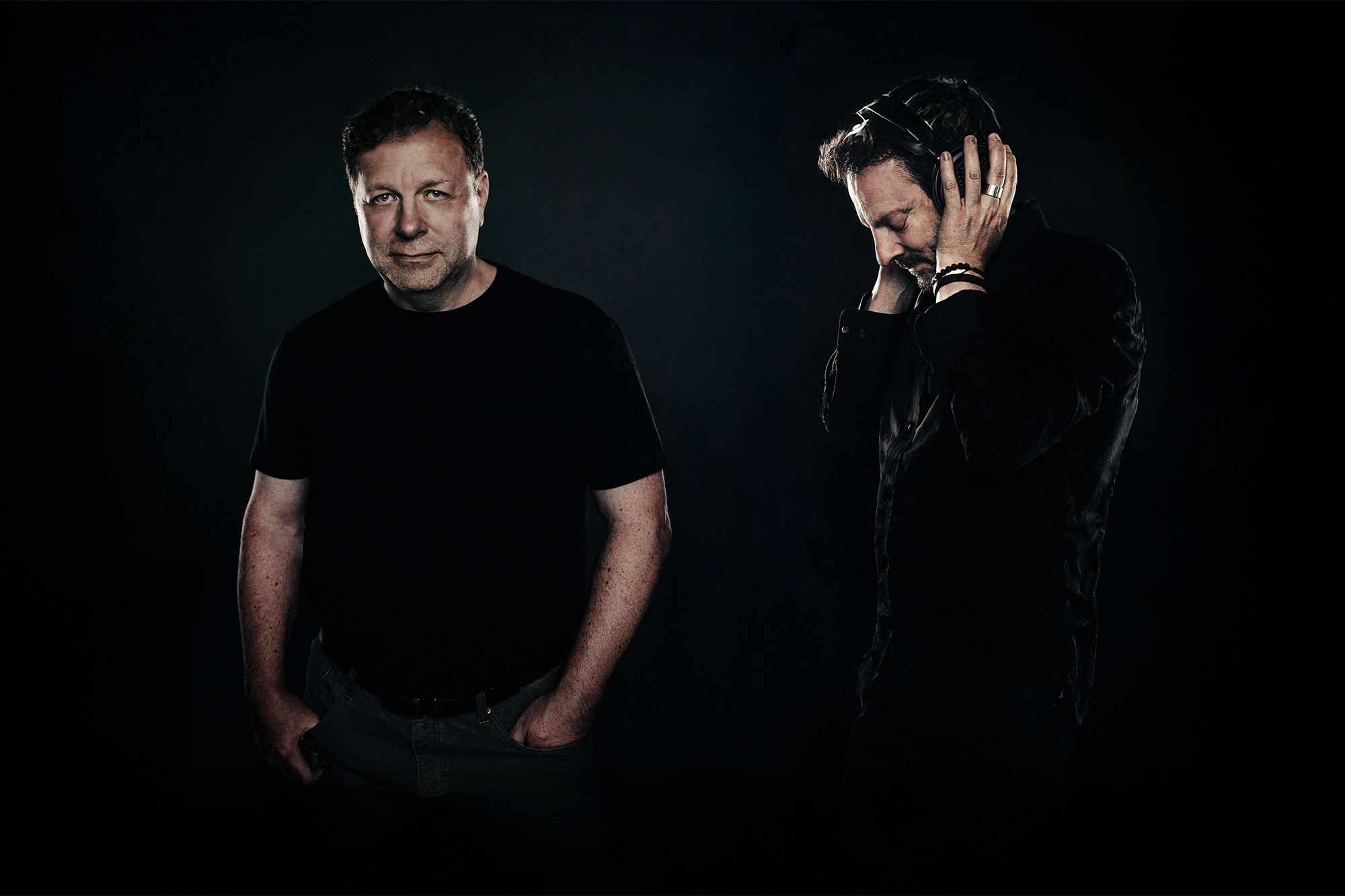
When re-recording mixer Ron Bartlett and music editor Clint Bennett first worked together on Cabin in the Woods, they discovered something rare: a creative partnership where each instinctively knows what the other is thinking. That collaboration has since become second nature and produced some of cinema’s most celebrated soundtracks, including two Academy Award-winning mixes for Dune: Part One and Part Two, the neon-drenched dystopia of Blade Runner 2049, and, most recently, Tron: Ares, featuring a score from Trent Reznor and Atticus Ross of Nine Inch Nails.
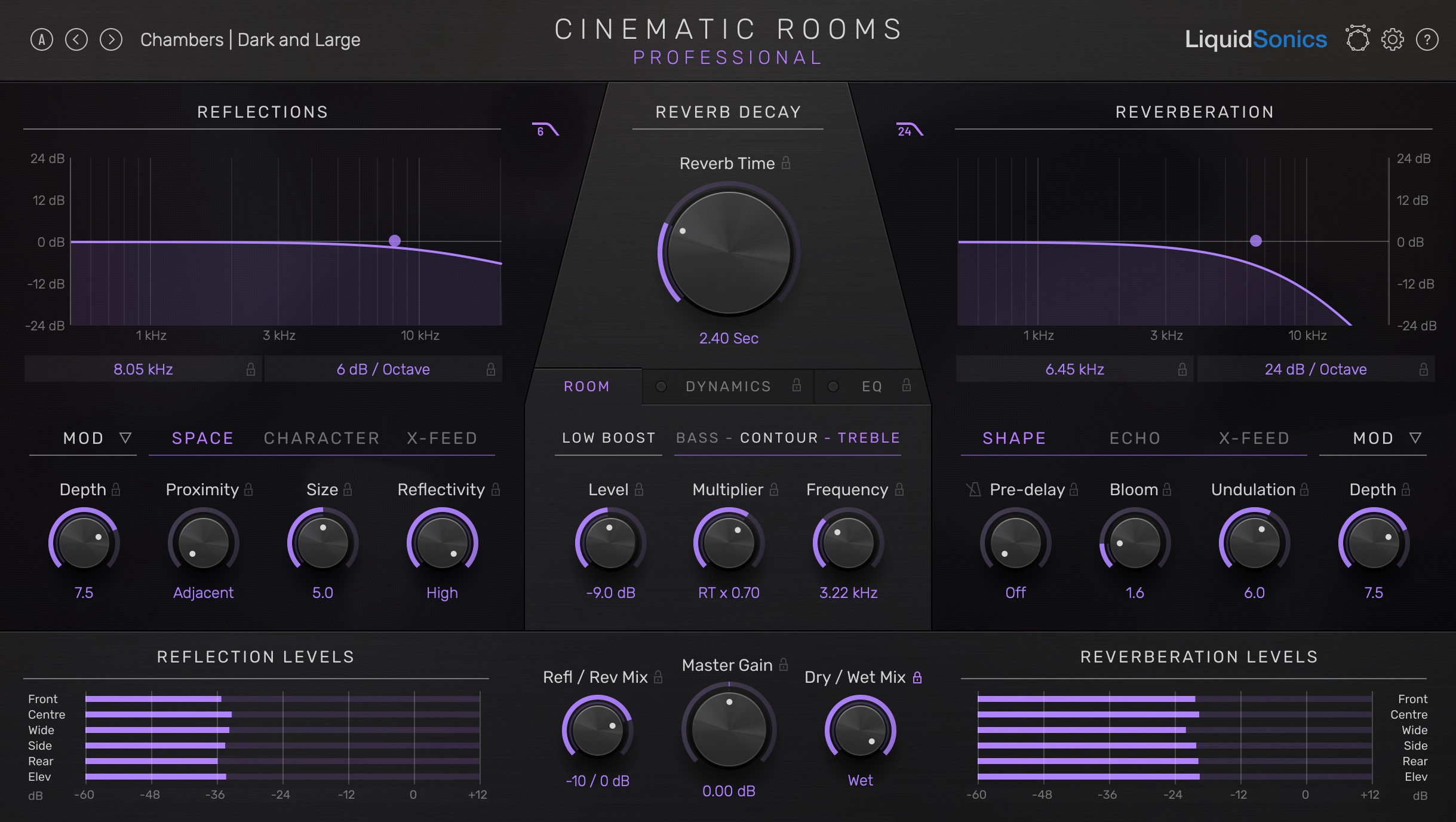
It was on Blade Runner 2049 that Cinematic Rooms Professional first entered their workflow. Sparked by Clint’s recommendation, it quickly became the cornerstone of Ron’s mixing template across dialogue and music alike. Today, the plugin travels with them from project to project, its presets labelled by film, its capabilities tested against the demands of everything from intimate dialogue scenes to the thundering electronic score of Tron.
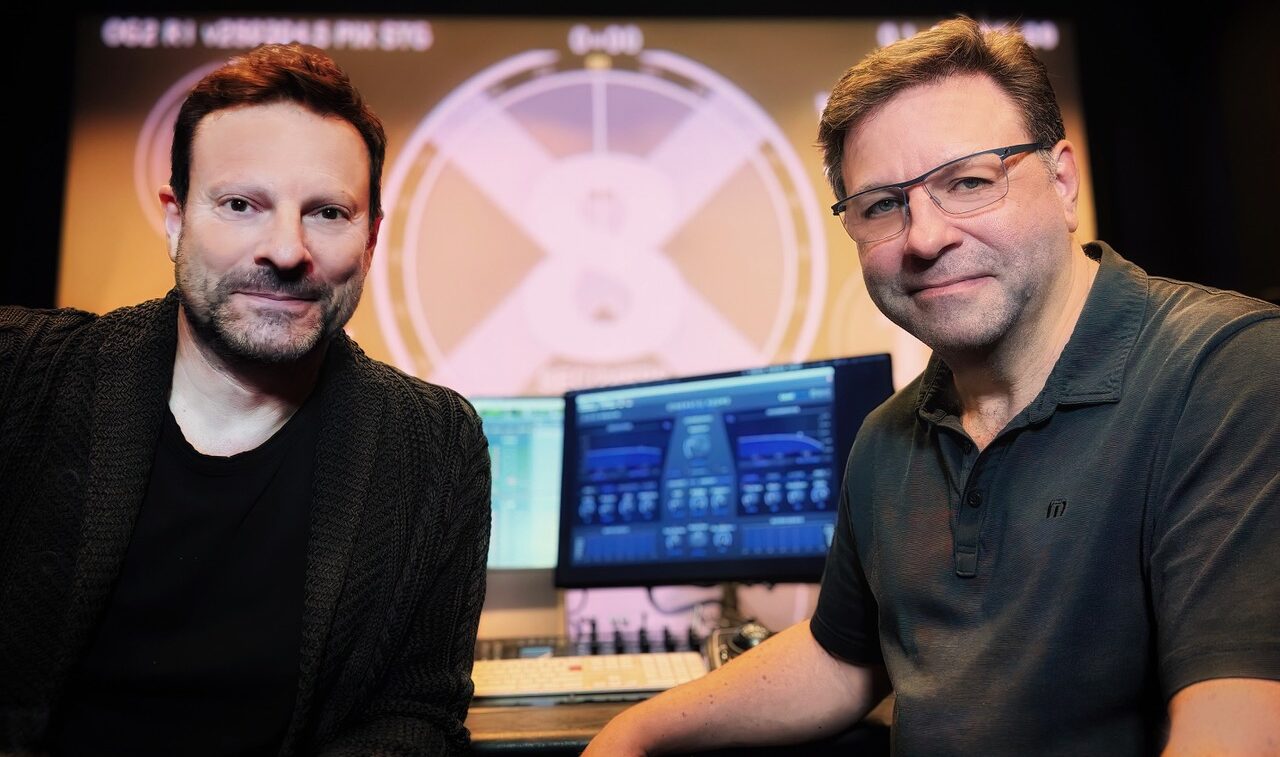
We visited Ron at his home studio in Los Angeles, California, with Clint dialling in from London, to discuss their working relationship, the technical demands of mixing for modern immersive formats, and why Cinematic Rooms Professional has earned permanent placement in their templates.
Q) It’s wonderful to have you both with us. Can you tell us how you first started working together and what makes your collaboration so effective?
Ron Bartlett: Clint and I met on “Cabin in the Woods”, which was pretty crazy. I couldn’t believe what he was doing over there. You know when you go to Benihana, and you see the guy chopping away, and there’s shrimp flying everywhere? That was Clint cutting up the score. It was unbelievable.
We became fast friends out of necessity, but we also just really thought the same way. I knew what he was thinking; he knew what I was thinking. He’d say, “This thing’s coming in on track 15, 16 now,” and I’d put up the faders.
It was so fast and furious, like a frenetic working situation. We got through that film and just sat back like, “Man, that was insane, but we’ve got to do more of this.”
We’ve continued to work on many films after that, and we kind of search each other out. It’s gone both ways many times. Then we hooked up with director Denis Villeneuve. Clint had worked with him on Arrival, then I came on for Blade Runner, and we’ve stuck together since. It’s been a fantastic ride.
Clint Bennett: Ron and I just hit it off instantly. I can’t tell you how many times we’re watching a scene and I’m thinking, “Right here, we really should go to that sound and crank up the lows, then kick it into this thing.” And before I have a chance to even say anything, he’s already headed there. More often than not, I’m not even going to say anything because he’s already doing it. I think he has a tap on my brain or something.
It makes it so fun to work together because we get to move at a really quick pace. As fast as we can think it, we try to execute ideas, and it frees us up to just play more. It’s not analytical. You experience it, feel it, and respond emotionally.
Q) For those unfamiliar with your respective roles, can you walk us through how a project flows between you?
Clint Bennett: I start a project typically much sooner than Ron, and I have a very different job at the beginning of the film than at the end. The beginning is often creating a temp track out of whatever I can: a temp music score for the whole film while they’re cutting it.
Ron comes in when we start doing things like temp mixes. If it goes well, you get into scoring with the composer, working with the composer and the director, making sure we’ve got a score that’s working. Then I take the mixes from the scoring mixer, which are usually given to me in 7.1 stems, and bring that to the dub stage where Ron and I are working.
Ron Bartlett: There’s a whole team behind us. If you take Dune as an example, Richard King is the supervising sound editor. He’s in charge of hiring a whole crew, overseeing all the sound effects and dialogue, and the work that goes into prepping and bringing it to the stage, including his editors and designers making sounds and working with Denis to get what he’s after.
I worked with the dialogue editor and the ADR editor and went through all the dialogue, all those different voices, the different languages, and placed them into environments. There are a lot of very subtle reverbs in that movie that put you in those spaces. This whole team does an amazing amount of work. But it’s my job, along with my partner Doug Hemphill, who mixes all the sound effects, to bring it all together. I do all the dialogue and all of the music in the mix.
Clint Bennett: Once Ron has worked on the music sessions, I carry that stuff with me through the rest of the project. As it goes through iterations and cuts, any work we’ve done, whether temp or final, I’m carrying along all the automation and mixing. As the picture changes, I’m making sure all that stuff stays intact. So when I bring it back, Ron shows up, and it’s pretty much how we left it, with all the changes that had to take place.
Cinematic Rooms and Blade Runner 2049
Q) When did Cinematic Rooms Professional first enter your workflow?
Clint Bennett: I think the first time we brought Cinematic Rooms in was when we did Blade Runner 2049. I remember we were having a conversation: “Ron, if there’s any movie where we can abuse the low end and reverb, this would be the one.”
Ron Bartlett: It was highly abused, I will say.
Clint Bennett: This is it. This is the one.
Ron Bartlett: I think there’s more low end in that movie than anything I could think of.
Clint Bennett: Oh man, it was crazy. There was smoke coming off the plugin.
Q) How did you approach the reverb to honour the spirit of the original 1982 film whilst creating something new?
Clint Bennett: We weren’t going for recreation so much as a spiritual nod, which was always the edict for the whole film. We didn’t want to recreate the old film. This isn’t the old film; it’s a different movie, but it still has to live in that world and contain its DNA and spirit. We didn’t want to rip off Vangelis. It doesn’t make any sense.
Ron Bartlett: Denis made that very clear. We wanted to make sure the spirit was there so that it felt the same, even though it wasn’t trying to be the same. That it feels like it belongs to the same world.
Q) And Cinematic Rooms fit that vision naturally?
Clint Bennett: Honestly, Cinematic Rooms was the richest-sounding, best-sounding reverb in the box that I had. It just felt the best. The tails felt the best. It was as simple as that.
Ron Bartlett: I layered two or three reverbs to make things happen, plus a delay. There’s not exactly one setting we like on that reverb. I could make a brighter plate with this long, rich tail and add a pulsing delay that feeds into that reverb, giving you a rolling effect. It was always about stacking certain elements.
Breaking the Rules with Tron: Ares
Q) Tron: Ares represents a completely different sonic universe. What was the collaboration with Trent Reznor and Atticus Ross like?
Ron Bartlett: Tron was a much different animal than the other films we were talking about. It was very much driven by Nine Inch Nails; Trent Reznor and Atticus Ross are executive producers on the film. They had a massive say and wanted to try something different by making it a very music-forward mix.
I almost had to suspend some of the usual rules and tropes, like “this should be in this pocket” or “this goes here and that goes there.” So it was going out of the normal box, pushing this further to see where it goes.
I sat with Atticus on every single music cue. We mixed everything together, went through the whole film over the course of weeks. They did three big cues before they went on tour, then they left and were still composing cues while on tour, which is insane. They brought rigs with them, working in hotel rooms and sending me stuff. So I had a template of the style and vibe they wanted. Then I went through the rest of the film while they were touring. When Atticus had a break, he came back, and we went through all the mixes I’d done, incorporated his ideas, and got it to where they were super happy.
Q) How did working with electronic music change your reverb approach compared to more orchestral scores?
Ron Bartlett: It was an aggressive score, a stylistic choice from the director and executives. Everyone at Disney was on board. Going through it, they weren’t just like “it’s all music, no sound effects.” They would comment, “That bus when it screeches in, that could be bigger because that’s when our music switches.” So we’d work with sound editors: “Can you give me more of the bus, or the skid of the light cycle, because it goes right into the drums?”
There’s a lot of sneaky reverbs in Tron that you don’t notice. A lot of very tight reverbs on music to spread things and make it fit together. That music is very pumping, very electronic; you don’t want to get all crazy and gooey with it. So I used a lot of super tight delays with Cargo Cult’s Slapper, and I use that in conjunction with Cinematic Rooms. I’ll do the delay and then feed that into a Cinematic Rooms reverb. It allows me to shape it and make it unusual, because if you just use the presets all the time, everybody’s like, “Oh, I know that one.” But when you take delays and alter things and feed that in, it’s unique.
Q) There are some huge environments in Tron, some with monologues where reverb is very clearly audible. Can you speak to the reverb strategy for those spaces?
Ron Bartlett: There’s a scene in the warehouse where we used three different things: two reverbs and a delay. I love a closer reverb that kind of attaches to the voice, and I like a longer one with more pre-delay that hits off the back wall of a warehouse. So you feel the depth and the size.
The smaller reverb lets you match ADR and everything else to feel real; it glues it all together. The bigger, longer reverb with the slap gives you the depth and size of the room because it’s a massive warehouse.
I try to keep that one a little more mellow, so you feel it, but it’s not like, “Oh my God, we’re in a giant room.” It should make you feel like this place is big, but you’re still tied to what they’re saying. Every film I do, I do my absolute best to make sure you can hear every single line of dialogue.
Both were Cinematic Rooms. There’s Cinematic Rooms in all of the rooms in Tron, the big warehouse, and some of the outdoor stuff mixed with Exponential Audio’s Stratus. It’s all over the music, too, because there are different tighter reverbs within the music.
Reverb Mixing Strategies
Q) You’ve talked before about the concept of “rack focus” in sound mixing. How does that philosophy guide your work?
Ron Bartlett: The whole idea is that you are a storyteller. You take Denis or whoever the director is, and you take their ideas and try to push that narrative. You find your way in the film, like, “Oh, I see what he’s up to, let’s push that,” and help direct the audience with sound by racking focus. It’s a term Doug Hemphill and I came up with: taking the intent of the score and the film and helping you find your way through the movie.
I always say there are three things: level, panning, and tone. Everything lives within those three. Compression or EQ, that’s tone. Panning, reverbs, delays, that’s more the space you’re using. And of course, level; getting in and out of stuff. If you think of those three things, it all comes together. Now you’re taking the intended score and pushing and pulling to focus yourself within the narrative. It’s important that we become members of the audience, in a way.
Clint Bennett: For me, it always comes back to basics. Is this moving me in whatever way it’s supposed to? Is this rocking? Is it sensitive? Whatever we’re trying to tell, because at the end of the day, it’s filmmaking. So are we all doing our best to make that the best it can be?
All the technicals aside, that stuff is almost a given. You have to have a palette from experience, tools, and techniques, but at the end of the day, you don’t want to think about any of that. You just want to experience it, feel it, and respond emotionally.
Ron Bartlett: Reverbs and delays play such a big part in that. We create perspective shifts with them. It could be “I want to make it more ethereal, vibey, or distant.” Sometimes it has to live in a room because it’s a source thing and needs to be more realistic. Other times it has to be dreamier. There are all these different adjectives you could throw at it. But that’s what we have to do: we take the tools and apply them to get what we want across in the film.
It’s such a wide range. It’s not like music mixing. Yes, you’re mixing music, but now you’re mixing it into a film with sound effects and dialogue, and it has to be either real or not, or emotional. Typically, the score gives you the emotional content. But there are so many times where it’s very real, and you have to make it sound real. Is it coming out of a PA? Is it in a car? Is it whatever? There are so many different uses for reverbs and delays that a big part of my whole setup is the tools that I use. And a lot of it you don’t hear, you don’t notice.
Q) Do you ever use reverb to solve problems or tackle particularly challenging scenarios in dialogue mixing?
Ron Bartlett: It happens organically all the time. How do you make something gel together? You put them in the same space. That’s a very simplistic way to answer, but it’s true. You’ve got these three things that don’t sound together; they don’t fit, and if you use the same shared room and atmosphere, suddenly they fit in the movie. That’s a big solve.
Especially on ADR, when you’re swapping out dialogue takes and things are all over the place. I can’t tell you how many times in every single movie, and a lot in Tron, there was some very noisy stuff. Tons of noise reduction. If you’re having to dig deeper in noise reduction, you’ve sucked out the room and everything else. That ambience goes first, maybe the low end too; it just sucks the life out of it. So now I’m having to put some of that back.
That’s where Cinematic Rooms Professional really comes in. It allows me to glue the whole track of dialogue together and make it natural. Because everyone’s got the same reverb, the same vibe, where you had three different things going on at once. That’s the biggest use for me: making those elements feel natural and cohesive.
Q) Are there similar situations in mixing music?
Ron Bartlett: With music, you’re often trying to make something bigger or you have a bunch of two-track mixes you’re trying to spread. How do you do that? You can’t just pan them out. If I have drums or any percussion, I never pan them back into the room because what’s the first thing that happens? Time delay. You’re in the room and you hear it in the surrounds first instead of the front, and it sounds horrible, like it’s bouncing. I hate it.
So I keep all my percussion, all the drums, up front, and then I use a tighter, softer reverb or a super tight delay. I use reverbs to make that spread without it being noticeable. It’s like, “Oh, there’s reverb on that kick?” Yeah, but you don’t really hear it as reverb; you just feel like it’s bigger. That’s a good use of it: spreading things out without causing you to go, “Why did they put so much reverb on all the drums?” I use a lot of very tight reverbs in Cinematic Rooms for that. I have a surround send that just sits back there, and when I want that wider feel, I go right to it.
Workflow and Technical Demands
Q) With projects like Dune featuring Hans Zimmer’s massive scores, how do you manage the technical demands of these sessions?
Clint Bennett: Ron and I have brought many a dub stage machine to its knees with some of our sessions.
Ron Bartlett: Oh my God. It’s a constant game.
Clint Bennett: And I’m like, it works fine in my room! In our home studios, we have the cranked out newest thing. I’m always at the bleeding edge; when the M4 Max came out, I was like, yes.
Ron Bartlett: But as soon as you get one and you max it out, you’re like, “Ah, I need a bigger one.” They make a bigger one. Then you max that out. It’s like a goldfish problem. You just keep feeding the goldfish. He gets bigger. And he doesn’t fit in the jar anymore.
Clint Bennett: On Dune 1, we had about 30 stems in 5.1, which were checkboarded across A, B, and C versions. So it was about 30 5.1 stems times three, plus extra stuff, and they would jump back and forth or be some combination of all two or three. It’s a lot of stuff.
Ron Bartlett: I got a brand new computer that cost me an arm and a leg. But it was the only way I could play Hans’s score because it was too big.
Q) Is reverb one of the heavier processing loads in sessions like that?
Clint Bennett: Honestly, with my rigs, I don’t have issues. I’ll have a lot of LiquidSonics reverbs going, and an insane number of other plugins, and it just doesn’t care anymore. It’s really nice. The reverbs don’t seem to be too weighty for me.
Ron Bartlett: In the past they were. Computers just weren’t as powerful and you couldn’t run stuff. Now with the Mac Studio, it is ridiculous. I could put 50 instances up, and it’s not even at 10%.
But the point now is delay compensation and how much you can deal with. Because we run everything so tightly in sync with dialogue and all that, it’s so important that you’re seeing and hearing the same thing. I can’t run a session that’s too far out, because now it blows the rest of the film.
Q) How many instances of Cinematic Rooms Professional are you typically running?
Ron Bartlett: I have different setups for dialogue and music, totally different rigs. I probably have four or five on dialogue that I go to. They’re constantly changing, but I know this one’s for larger stuff, this one’s for ADR, this one’s for source, this one’s for tails. I always keep it organized that way because you can grab stuff more quickly. In music, the most minimal setup would be three or four.
Clint Bennett: I’d say it’s usually about four to five in your sessions.
Ron Bartlett: And then I have a couple of other reverbs as well. But Cinematic Rooms Professional is my absolute number one reverb that I use all the time.
Q) You’ve mentioned speed being critical. How does that affect your choice of tools?
Ron Bartlett: A lot of this is so quick that you’ve got to go with what you know. If you’re mixing away, you think, “Oh, I need that,” bam, I know where that is, and I just go for it. Because I know what it’s going to do, I know that’s the sound I’m after, and it works every time.
You can’t always sit there and go, “Let me design a preset now.” Everybody’s going to look at you like, “What the hell are you doing? We have a schedule.” So you’ve got to go with things you know will work right away. And I have a plethora of them in Cinematic Rooms Professional.
I label my presets per movie. So I can go, “Oh, I know that thing I did in Dune, in the stone tent.” I’m going to grab it because I know what it’ll do. I might alter it a bit, maybe it’s too long, whatever, but I know the quality and what it’s going to do. Or the reflections work great, but I need it longer, so I take that and add a long cistern from Altiverb or whatever. I grab certain elements out of certain presets from different reverbs and add other things to get what I need.
It’s a big time constraint with the money and people’s patience. We have to have a set of tools that we grab quickly. When I’m on my own time, I can sit and tweak stuff; that’s what I do here at home. But when I take it to Disney or Universal or Warner’s, I have to be quick and just call stuff up and use it right away. No messing around.
Clint Bennett: I use reverb a ton because I’m designing a lot of stuff musically, certainly on a temp, pulling out every trick to create a score that never existed. Reverbs and delays, all the same techniques I would use while mixing, I’m doing on the fly when I’m cutting or creating something. Usually with Ron, I’ll leave a lot of it live because we’re similar in how we approach it. He’ll be like, “Oh yeah, I see what’s going on here,” and he can tweak it as needed in the final mix.
Q) Do you make use of the surround editing planes in Cinematic Rooms Professional, where you can change parameters based on position?
Ron Bartlett: Oh, absolutely. Not all the time, because a lot of times it’s about, “That sounds good, I’m good.” But there are other times when I’m using an instance up front, and I want more in the back, so I alter that. I’m always thinking about how it sits in the room versus the back and front, and the balance with the mid surrounds as well. Because it’ll build up and you have to be careful: “Now I’m too heavy in the back” or “The mids are really in my face, and I want them to sit back.”
It spreads things out and lets you access parameters that many reverbs don’t have. You’d have to split things out with faders, and it’s less cumbersome having it in the plugin itself. You just make the preset that way, and you’re good. I’m all about EQing and levelling, the panning structure, whatever makes me feel like that’s cool and has a lot of depth and clarity to it. Those are two of my big words for it.

Q) Do you have favourite stock presets, or do you primarily use customised settings?
Ron Bartlett: I tweak everything. But if we’re on a desert island and you said, “What reverb would you like?” and I couldn’t change it, I would say Rich Long Hall is a great one for big rooms or tails. The Ambience presets are great for a good, clear reverb to start with. Maybe Quarry or something for outside. But I tweak them all so much, it’s not really a fair comment.
Clint Bennett: I don’t really remember the preset names. At some point, I started from a couple and tweaked them to get good starting points for what I do. I’m like, “I like this,” and I save them as whatever I like to call them. Those names won’t mean anything to anybody except me.
Although there has been one occasion when I’ve used the post presets, like “Upstairs Doors Door Closed,” where it’s literally behind a wall. Picture editors will say, “I need this song here,” and it shifts perspective to behind a wall. And I’m like, hey, that actually is really convincing. I can get that to sit right with a little bit of tweaking.
Q) What role does hardware reverb play in your work today?
Ron Bartlett: I so rarely use anything hardware. It would have to be a really important reason.
Clint Bennett: It’s pretty rare. Maybe on guitar pedals while playing. But I haven’t used hardware reverbs in a while. If I was doing a tracking date at a studio with a console, I might pull up a hardware reverb to make it sound nice. But I’m not missing anything in the reverb world that I need a hardware unit for.
Ron Bartlett: With everything else, all the changes we do, picture changes, conforming everything, it’s insane. If you’re tied to hardware and you’re stuck, the last thing you want is that thing creating problems on the final. Everyone’s saying, “Why are we having to redo this? And it doesn’t sound the same.”
Clint Bennett: Recallability, portability, all that stuff is so valuable. I’m in London right now, and I have my rig in my bag. They rent me some basic hardware, and I bring my headphones and work that way.
Q) If you had to sum up why Cinematic Rooms has become your go-to reverb, what would you say?
Ron Bartlett: Back in the analogue days with a Lexicon 480L, I could probably sit down, not look at the remote, and call up most of the programs just by feel: one, two, nine, two, five, like that. That’s the idea you want out of your reverb. Cinematic Rooms Professional is like, “Oh, I know this one works on this. These are the presets I’ve made. I’m going to grab that one.” It’s quick, it’s efficient, it already sounds great.
Clint Bennett: The UI has a lot to do with that. It can be very simple to operate, but you can dive in if needed. It doesn’t feel bounding, overwhelming, or too tweaky. If I want to change the time, I just grab the big knob and change the time. If I want to mellow out the top end, I can mellow out the top end. It’s not complicated.
Ron Bartlett: LiquidSonics reverbs are very quick to edit, they sound great, and they are easy to use. You don’t have to deal with other stuff. It’s a no-brainer.
Clint Bennett: Yeah, they just sound great.
Massive thanks to Ron and Clint for taking the time for this in-depth look at creating the sound for some of Hollywood’s biggest Science Fiction films.

Ron Bartlett
Ron Bartlett is a two-time Academy Award-winning re-recording mixer whose credits include Dune: Part One and Part Two, Blade Runner 2049, Tron: Ares, and Bob Marley: One Love.
Social: Instagram

Clint Bennett
Clint Bennett is an award-nominated music editor whose credits include Dune: Part One and Part Two, Blade Runner 2049, Arrival, and Alien: Romulus.
Website and Social Links: https://lnk.bio/cbedit
Photos by Phillip Graybill
